Permeable Paths Vs Traditional Surfacing for Oxfordshire Estates
The surface beneath your feet affects far more than how an estate looks. Paths need to manage rain, support safe access, suit the people using them and stand up to daily wear. When the wrong material is chosen, puddles, loose edges and uneven routes can quickly affect the appearance and usability of a site.
Across Oxfordshire, we work around historic settings, rural grounds, managed developments, schools, business parks and sports facilities. Wet autumn and winter weather, falling leaves and regular footfall can soon expose weak drainage or tired surfacing. As commercial landscape contractors in Oxfordshire, we assess how each area is used before recommending a suitable path system.
Why Permeable Paths Help Manage Rainfall
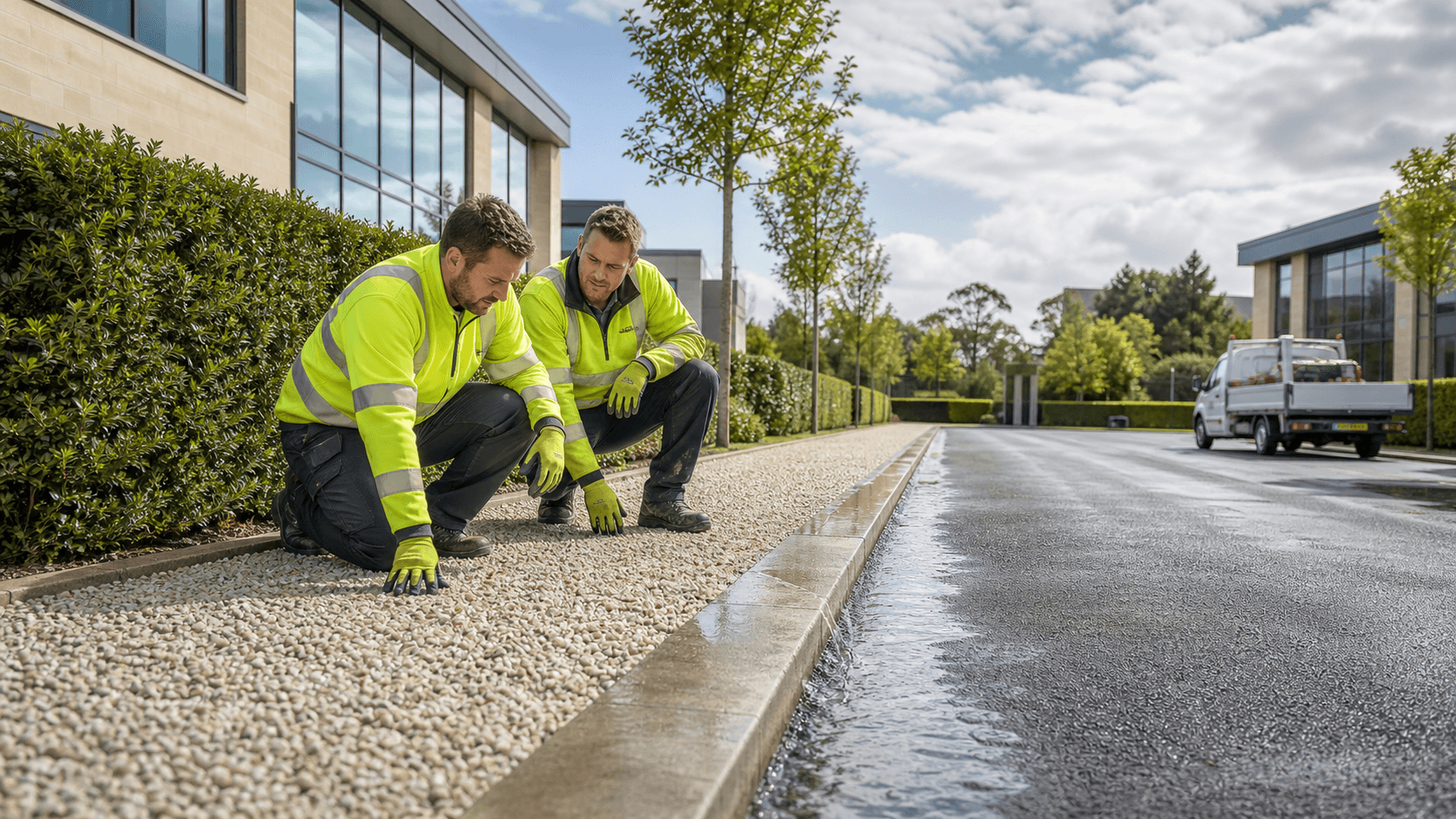
Permeable paths are designed to let water pass through the finished surface and into a prepared layer beneath. Rather than sending all rainfall across the top of the path towards a drain, water can be managed closer to where it lands.
Common permeable options include resin-bound gravel, porous asphalt, gravel grids and permeable paving. Each system has a different look and is suited to different levels of use, but they share the same basic aim: reducing surface water.
On an estate with plenty of hard surfacing, this approach can help reduce pressure on existing drainage features. It can also limit the problems that develop when water repeatedly collects around entrances, pedestrian links and communal areas.
A well-planned permeable path may help to reduce:
- Standing water after rainfall
- Mud being carried onto paths and into buildings
- Erosion at path edges and nearby planted areas
- Slippery patches caused by puddles and leaf debris
- Run-off travelling towards drains too quickly
Ground conditions matter just as much as the finished surface. We consider soil type, slopes, drainage routes, surrounding planting and expected footfall before deciding whether a permeable system is appropriate. A path that drains well on one part of an estate may not be suitable for another.
Where Traditional Surfacing Still Makes Sense
Permeable paths are not automatically the right answer everywhere. Traditional surfacing can be a sensible choice where routes need to cope with frequent service vehicles, delivery traffic, maintenance equipment or heavy pedestrian use.
Tarmac often creates a smooth, practical route for busy accessways and larger pedestrian areas. Concrete can suit hard-working service zones and loading spaces, while conventional block paving may be preferred around formal entrances, courtyards and office developments where a more structured finish is wanted.
The key difference is that impermeable materials direct rainwater across the surface. This means the levels, falls, channels, gullies and drains all need to work together. If a drain becomes blocked with leaves or silt, water may collect quickly in low spots.
Traditional surfaces can work well when drainage infrastructure is already carefully planned and regularly maintained. Before choosing one, we look at where rainwater will travel, whether drains are accessible for cleaning and whether the route is likely to create puddles near doors, crossings or car parks.
Think Beyond Installation and Short-Term Disruption
Choosing a surface is not only about the day it is laid. We encourage estate managers to consider how the route will look, perform and be maintained over time.
Permeable systems often need careful excavation, specialist sub-base preparation and the right materials beneath the visible finish. Conventional surfacing may be more straightforward in some larger areas, but it can bring ongoing demands for drain clearance, patch repairs and surface-water management.
When comparing options, we recommend thinking about:
- The weight and frequency of expected traffic
- How often drainage channels and gullies will need clearing
- The likelihood of puddles, cracking or loose material
- Access needs for wheelchairs, pushchairs and maintenance equipment
- How works can be phased around everyday site use
Occupied sites need thoughtful planning. Schools may need work timed around term dates, while business parks and managed developments may require safe diversions so tenants, visitors and staff can move around without disruption. We plan routes and work stages around the daily demands of the site, rather than treating paths as isolated strips of hard standing.
A combination of surfaces is often the most practical answer. A permeable pedestrian route might suit a landscaped communal area, while tarmac or concrete may be better for a service entrance. Matching the material to the purpose of each zone can avoid unnecessary problems later.
Plan for Winter Safety and Site Character
Autumn and winter place extra pressure on every path. Persistent rain, wet leaves, frost and shorter daylight hours can make even a well-used route more hazardous. Entrances, car parks, pedestrian links and shared outdoor spaces deserve particular attention because these are the places where people may be carrying bags, pushing equipment or moving quickly between buildings.
Whatever surface you select, safe routes rely on good design and regular grounds maintenance. We look for even levels, clear edges, sensible gradients, adequate width and drainage that continues to work when leaves begin to fall.
Ongoing care should include:
- Planned leaf clearance from paths, channels and gullies
- Checks for loose aggregate, cracked areas and worn edges
- Attention to low spots where water repeatedly gathers
- Clear boundaries between paths, planting beds and grass
- Winter inspections of high-use pedestrian routes
Appearance matters too. Gravel, resin-bound finishes and natural stone can sit comfortably within rural settings and older estates. Tarmac and concrete may better suit modern business parks, practical access routes and service areas. The most suitable choice should reflect the architecture, planting, users and maintenance plan for the whole site.
Choose a Surface That Works for the Long Term
Permeable paths can be a strong option where drainage, a natural finish and water management are priorities. Traditional surfacing remains useful for high-load or heavily used areas where a firm, predictable route is needed. In many cases, the best result comes from using both approaches in the right places.
Before winter wear becomes harder to manage, review paths for persistent puddling, cracks, uneven levels, loose material, blocked channels and recurring slip risks. A professional assessment can help identify whether drainage improvements, repairs or a change of surface will give your estate safer, cleaner and more dependable routes throughout the year.
Gain A Clear Plan For Your Estate Paths
HumphriesTrio Grounds Maintenance provides practical estate management support tailored to the demands of busy outdoor spaces. Our commercial landscape contractors in Oxfordshire can coordinate ongoing care that keeps pathways, grounds and shared areas looking their best. To discuss your estate's requirements, contact us for a tailored plan.