
See the Value of a Better-Managed Estate
Commercial estate landscaping in London is about far more than keeping grass short and flowerbeds tidy. For estate managers, property managers and facilities teams, well-managed grounds help create safer, more welcoming spaces for tenants, visitors, staff, pupils and residents.
London sites often face high footfall, limited green areas, tight access, parking restrictions and changing weather. A planned approach helps keep outdoor areas presentable through the year while supporting kerb appeal, safety, biodiversity and the long-term condition of the estate. We see grounds management as a practical part of caring for the whole site, not a decorative extra.
Set Clear Standards Before Work Begins
Before we create a maintenance programme, we need a clear picture of how your estate works day to day. Site size matters, but so do entrances, planted areas, pedestrian routes, car parks, drainage points, boundary features and the way people use each space.
For a business park, smart, clean arrival areas may be needed to reflect the quality of the offices. Managed residential developments may need regular lawn care, hedge cutting, litter clearance and seasonal colour in shared spaces. Schools and sports facilities can need carefully planned visits around term times, events and safeguarding requirements.
The tailored specification should make the expected standard easy to understand. It should cover practical details such as:
- Visit frequency for routine maintenance
- Presentation standards for lawns, beds, paths and entrances
- Response arrangements for reactive issues
- Reporting methods and named points of contact
- Access, parking, noise and pedestrian safety requirements
Across London, timing can make a major difference. We plan work around busy periods, delivery routes, school drop-offs, office arrivals and public access so that grounds remain cared for without causing unnecessary disruption.
Expect Reliable Year-Round Grounds Maintenance
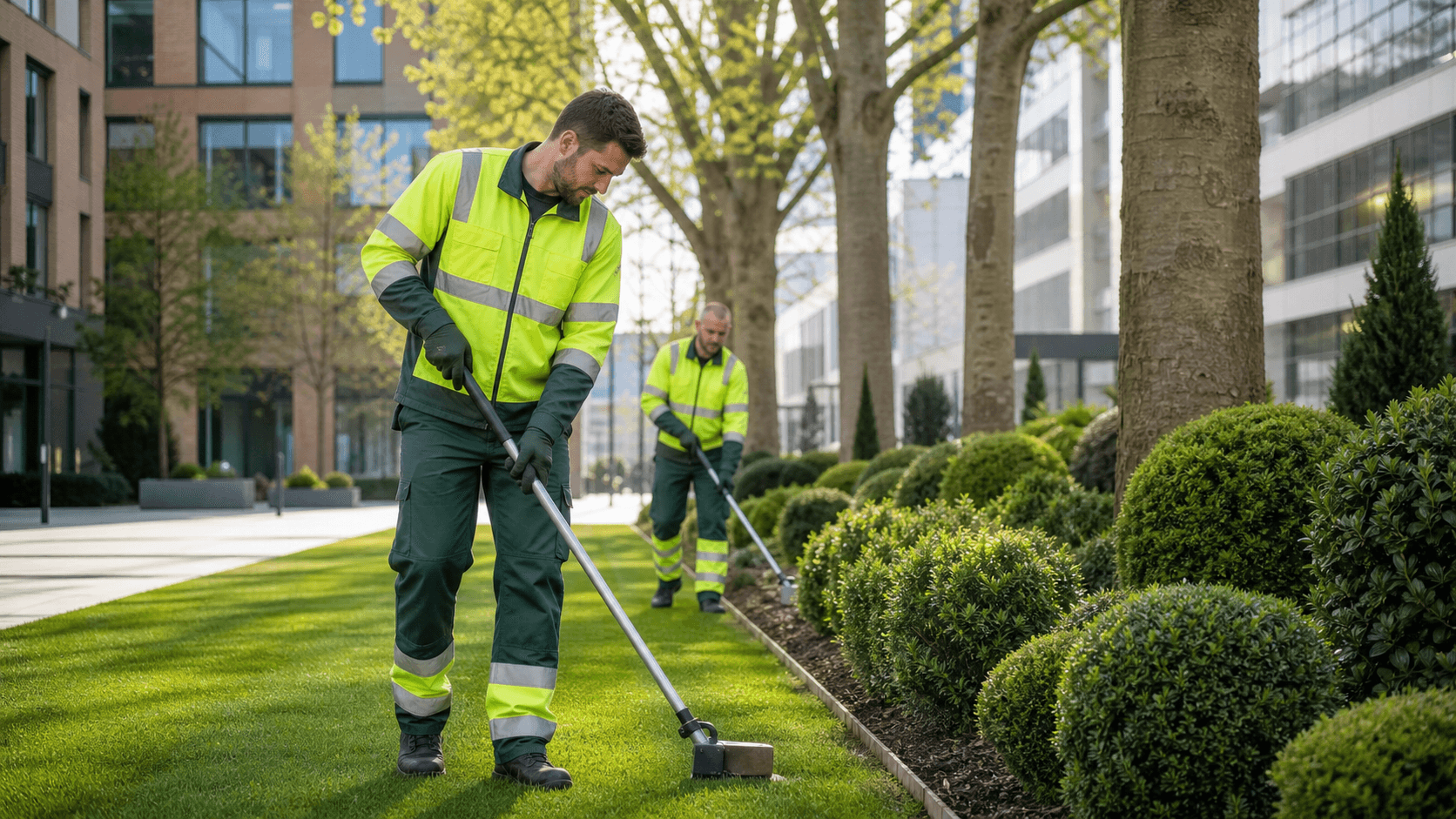
Routine care is the foundation of commercial estate landscaping in London. Regular visits help keep lawns, hedges, shrubs, borders, hard surfaces and communal areas in good order through every season. Consistency matters when your outdoor areas shape a visitor's first impression or affect how occupiers feel about the place where they work or live.
The right programme will depend on the site, its planting scheme and its level of use. Work may include:
- Grass cutting, edging and turf care
- Hedge cutting, pruning and border maintenance
- Weed control and hard-surface upkeep
- Litter picking and leaf clearance
- Irrigation checks and care of planted areas
Autumn brings its own priorities. In October, fallen leaves can quickly cover paths, block drainage channels and create slippery areas. This is also a sensible time to cut back suitable vegetation, prepare beds for winter planting and inspect exposed areas before wetter, windier conditions arrive.
Effective service is not simply a checklist completed on a set day. Our operatives should be alert to developing issues, whether that is damaged turf, stressed planting, an overgrown boundary, pooling water or a branch that could become a concern. Reporting early gives you time to deal with small problems before they affect presentation, safety or future maintenance needs.
Balance Visual Appeal with Site Safety
Every tidy estate should also be easy and safe to use. Clear paths, visible signs, well-kept entrances and defined boundaries help people move around with confidence, especially where space is limited and foot traffic is constant.
Regular grounds work can support day-to-day risk reduction in several ways. Clearing leaves can lower slip risks during autumn and winter. Pruning can improve sightlines near signs, paths, entrances and car parks. Weed management can help protect paved surfaces, while routine checks may reveal damaged edging, uneven areas or vegetation growing into access routes.
Some tasks need extra planning. Tree work, invasive weed treatment, drainage concerns and work close to roads or public spaces may require suitable equipment, trained teams and careful safety processes. We believe you should expect work to be planned responsibly around people, vehicles and the normal activity of the estate.
Presentation and safety should never compete with one another. Thoughtful planting can soften an entrance without blocking visibility. Neat shrubs can frame a pathway without narrowing it. The best grounds management plans are based on how people actually use the space, rather than treating outdoor areas as an afterthought.
Build Biodiversity Into Your Estate
Smart commercial grounds do not have to be formal, heavily planted or difficult to maintain. With the right plan, we can help you introduce habitat value and seasonal interest while maintaining the professional appearance expected on a commercial site.
Biodiversity measures should suit the character of the estate, the space available and the people who use it. Options may include wildflower sections, pollinator-friendly planting, native hedgerows, spring bulbs or managed grass areas. These features can be clearly designed and properly maintained, rather than being left to look neglected.
October is a useful month for reviewing what worked during the growing season and planning ahead. Beds can be prepared, selected trees and hedging may be planted, and spring-flowering bulbs can be introduced. It is also a good time to identify areas where future planting could improve soil cover, structure and habitat without affecting access or visibility.
Such a planting scheme can also make maintenance more manageable over time. Suitable plants are often better able to cope with their position once established, while year-round structure can keep an estate looking cared for even when seasonal colour fades.
Review Your Estate Before Winter Takes Hold
Before winter sets in, it is worth reviewing whether your current grounds plan is meeting the standard you need. Look at entrances, paths, drainage areas, hedges, lawns and planting beds, then consider how quickly issues are noticed and communicated. Pay attention to leaf build-up, exposed boundaries, worn turf and any spaces that could offer more value for wildlife.
This useful review should lead to clear actions, not vague promises. You should know which autumn and winter tasks need attention, what routine visits will cover and how the condition of your estate will be monitored as the seasons change.
Check for:
- Leaf build-up on paths, steps and drainage channels
- Damaged edging, uneven paving and trip hazards
- Overgrown hedges or branches affecting access and visibility
- Worn lawns, bare soil and stressed planting
- Blocked drains, pooling water and signs of surface damage
- Areas where planting could better support wildlife without affecting safety
Regular, practical reviews help an estate remain safe, welcoming and resilient through changing conditions. By identifying issues early and planning work around how the site is used, grounds management can protect both the appearance and long-term value of outdoor spaces.
Keep Your Estate Looking Its Best
HumphriesTrio Grounds Maintenance provides tailored support for commercial estate landscaping in London, with plans designed around your site's needs and priorities. Our experienced team can help maintain safe, attractive and functional outdoor areas throughout the year. To discuss your estate requirements, contact us today.