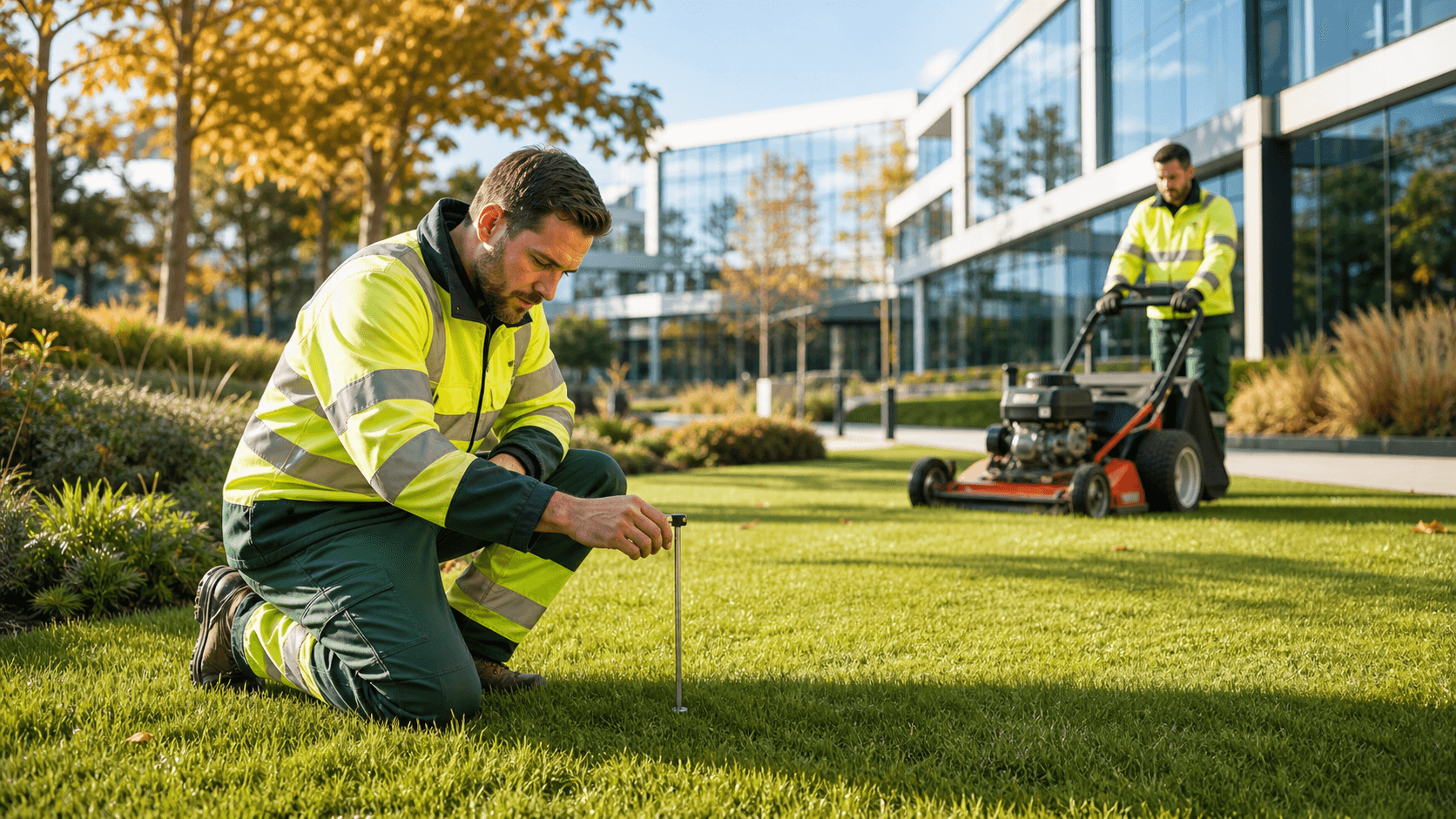
When Grass Growth Slows on Buckinghamshire Commercial Sites
Slower grass growth in autumn can make grounds maintenance harder to judge, not easier. A lawn may look unchanged for days, then produce uneven patches after mild, wet weather. We help facilities managers, managing agents and estate owners keep commercial grounds tidy without cutting turf when conditions are unsuitable.
For staff, visitors, residents and customers, the condition of your outdoor space still shapes their first impression. A planned approach lets us protect presentation, safety and turf health as growth becomes less predictable.
Keep Commercial Grounds Presentable as Growth Eases
Late autumn is not a time to simply stop mowing. Grass may grow more slowly, but it can still become untidy around entrances, kerbs, building edges and signs. Paths can become obscured, long grass can hold moisture, and neglected areas can make an otherwise well-managed site look uncared for.
Rather than following the frequent mowing pattern used in summer, we recommend condition-led maintenance. This means we assess what the grass and the wider site actually need before deciding whether a cut is worthwhile. It avoids unnecessary passes while keeping the areas people notice most in good order.
Presentation checks often focus on:
- Entrance lawns and visitor-facing areas
- Grass along paths, car parks and access roads
- Edges around buildings, fencing and signage
- Uneven patches that stand out from the rest of the site
Why Autumn Grass Growth Changes Across Buckinghamshire
From late October, shorter days and cooler temperatures naturally slow grass growth. Heavier rainfall can add another layer of uncertainty, especially when mild spells encourage brief bursts of growth between colder periods. Across Buckinghamshire, we see conditions differ widely between open business parks, sheltered estates, school grounds and larger rural commercial settings.
Exposure matters. A lawn in a windy, open location may dry out quickly but grow slowly, while a shaded area beside a building may stay wet for longer. Soil type, drainage and nearby trees also affect how long a surface remains suitable for mowing.
Wet grass is not just awkward to cut. When soil is saturated, machinery can leave ruts, compact the ground and create tyre marks that remain visible through winter. Dew-covered grass can also clump beneath mowing equipment, leaving an uneven finish and depositing cuttings across the lawn. Cutting at the wrong time may weaken the surface just when it needs to cope with colder weather.
That is why commercial grass cutting in Buckinghamshire works best when it responds to real site conditions. We can adjust visits around weather, growth rates and how each area is used, rather than treating every lawn as though it follows the same summer schedule.
Set Mowing Frequency Around Your Site Conditions
A lawn does not need rapid growth to need attention. Uneven tufts, long grass around walls, untidy approach routes and grass creeping onto hard surfaces are all signs that a visit may be needed. Even modest growth can look noticeable in a high-profile entrance or a shared area used every day.
When we plan commercial grass cutting in Buckinghamshire, we consider more than the calendar. The right frequency will depend on the site and the standards you need to maintain. Areas with regular footfall or a clear public-facing role may need closer attention than quiet boundary strips.
Factors we review include:
- Grass type and the condition of the turf
- Drainage, shade and moisture levels
- Footfall, vehicle access and general site use
- The appearance expected by tenants, visitors or residents
- Whether irrigation or nearby planting affects growth
Cutting height matters too. Grass should not be cut too short in autumn. Leaving a sensible amount of leaf growth helps the turf cope with reduced daylight, colder conditions and seasonal wear. A careful cut can maintain a neat finish without placing extra stress on the grass.
Mowing also needs to sit alongside the rest of the autumn programme. Leaf clearance, hedge maintenance, border tidying and path sweeping all affect how the site looks and functions. By coordinating these jobs, we can reduce disruption and avoid the common problem of freshly cut lawns becoming covered with leaves soon afterwards.
Protect Turf Through Wet Weather and Falling Leaves
Persistent rain can expose weak points in commercial grounds. Soft areas, standing water and muddy edges are especially common where drainage is poor or the ground receives frequent traffic. In these conditions, we assess whether machinery should be kept off vulnerable turf to prevent compaction and surface damage.
Careful timing is often the best protection. Waiting until ground conditions improve can be better for the lawn than forcing a cut that leaves wheel marks or damages the soil structure. This is particularly important on visible lawns, communal areas and sites where muddy ground could be carried onto paths or inside buildings.
Fallen leaves need similar attention. A thick layer blocks light from the grass, traps moisture and can encourage unhealthy conditions beneath it. Wet leaves also create a slip risk on paths, steps, entrances and car park walkways, so clearance supports both appearance and safe access.
Autumn work that supports winter resilience can include aeration, debris removal, drainage checks and careful mowing at the right height. Taken together, these measures help the turf enter the colder months in better condition and can reduce bare patches or muddy areas when spring arrives.
Review Seasonal Grounds Needs Before Winter
An autumn grounds review gives you a clearer picture of what each part of the site needs before winter weather sets in. We look at grass condition, mowing requirements, wet areas, leaf build-up and the wider tasks that keep commercial grounds orderly and safe.
The most practical approach is to set priorities by condition rather than relying on a fixed routine. When turf, drainage and presentation are monitored together, you can avoid avoidable damage while keeping your Buckinghamshire site ready for the people who use it each day.
Keep Your Grounds Looking Their Best
HumphriesTrio Grounds Maintenance provides responsive commercial grass cutting in Buckinghamshire tailored to your site's changing needs. Our team can help maintain a neat, professional outdoor environment throughout the season. To discuss your requirements, contact us for a tailored quote.