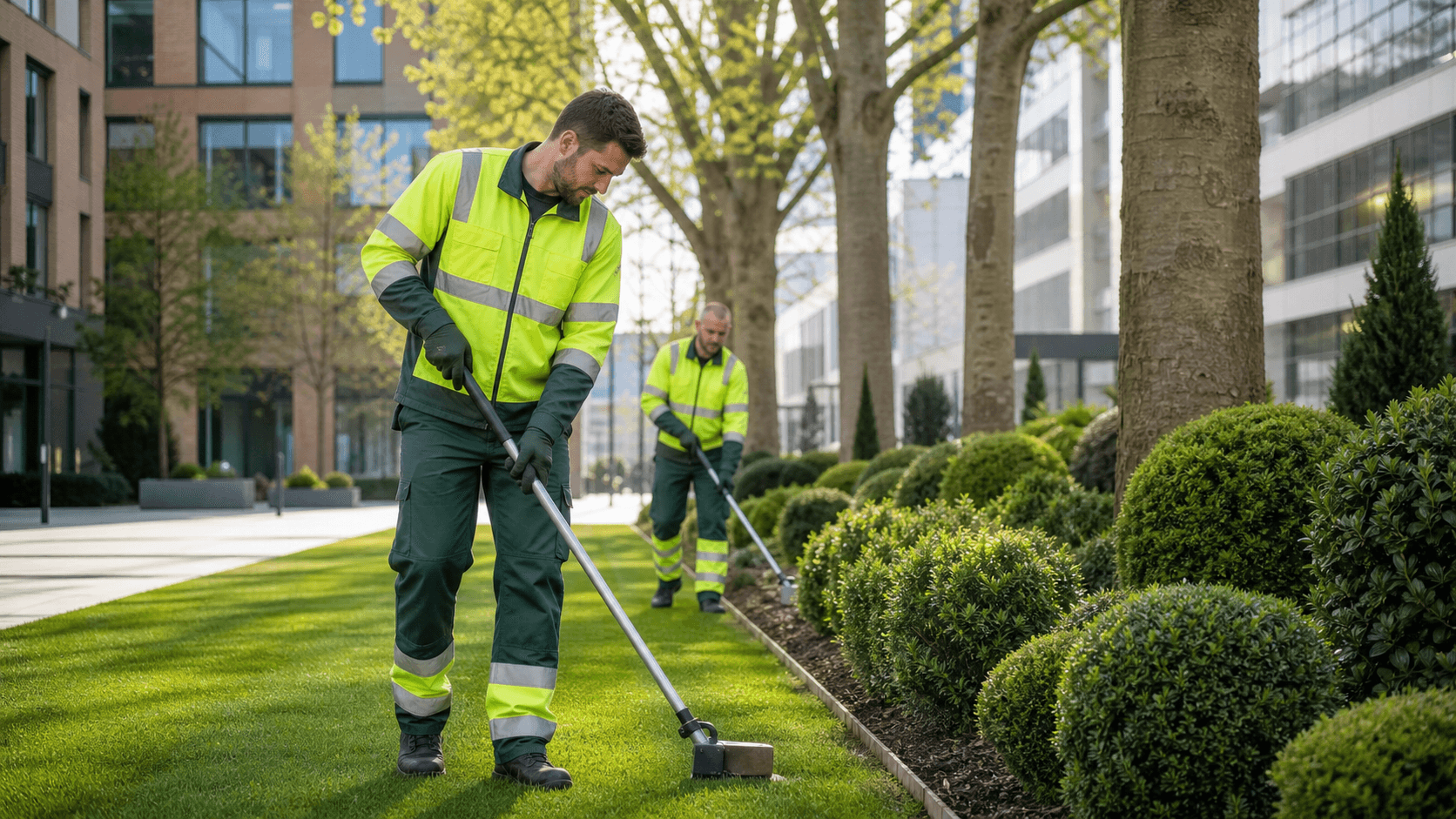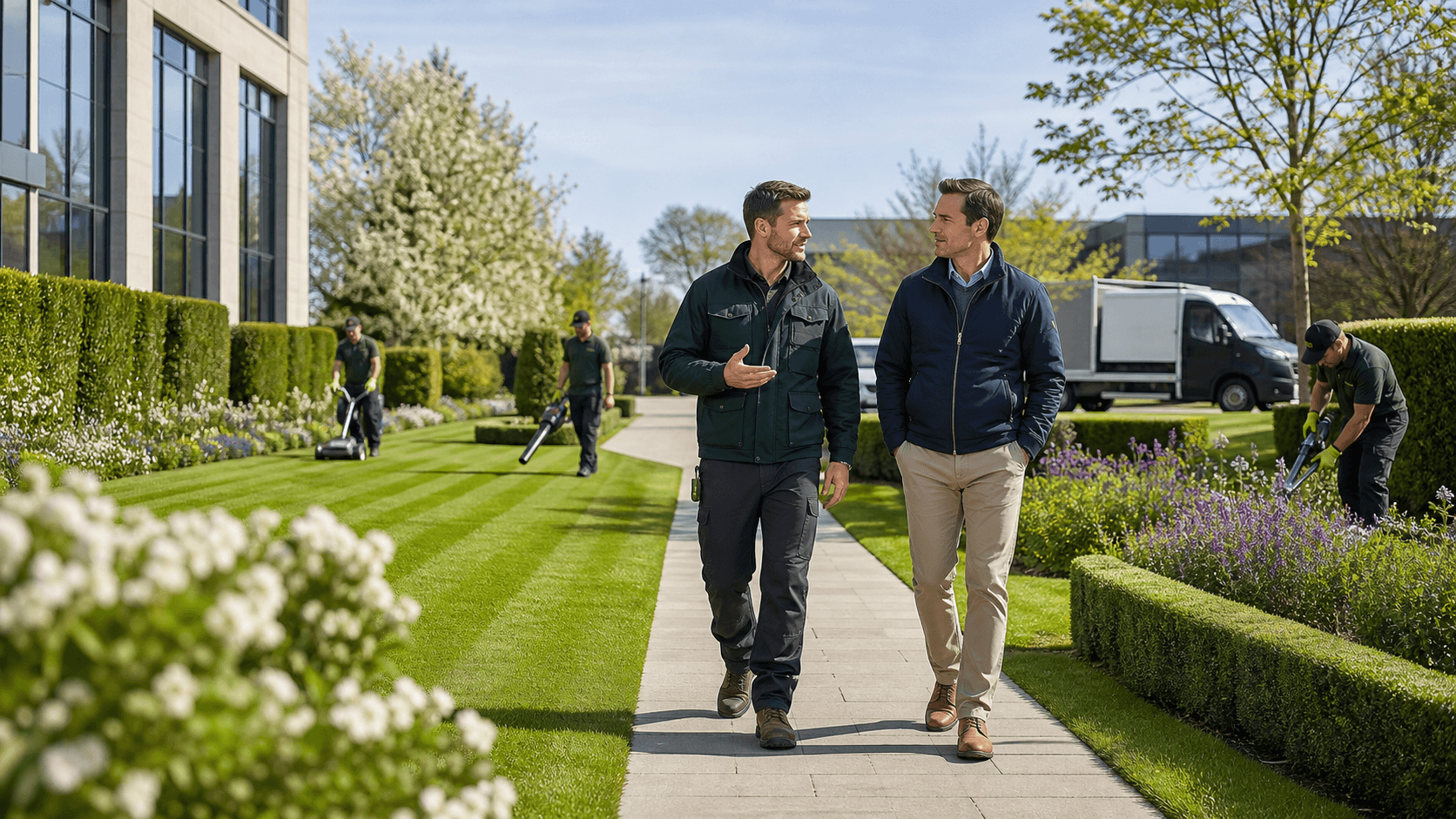
A commercial grounds maintenance site visit gives us the information we need to care for your outdoor spaces properly. No two locations work in quite the same way. An estate, managed development, business park, school or sports setting will each have different users, pressures and expectations.
By walking the site with you, we can see how the grounds are used, where problems may develop and which standards matter most to the people responsible for the property. It is a practical first step towards planned maintenance, specialist operations and habitat management that suit the site rather than relying on guesswork.
See How a Site Visit Protects Your Grounds
Working with commercial grounds maintenance contractors in Oxfordshire who understand local site types and changing seasonal conditions can make planning much clearer. During a visit, we look beyond what is immediately visible from the entrance. We consider the whole setting, including the areas that affect safety, daily access and long-term presentation.
A site manager may have concerns about untidy boundaries, poor drainage, planting that is becoming difficult to manage or shared spaces that need more regular care. Bringing these points up early allows us to build them into a realistic programme.
The visit also helps us understand the balance you need between appearance, practical use and available budgets. Some areas need a formal, polished finish throughout the year, while others may be better suited to lower-intensity maintenance or habitat-focused management.
Start with Safety, Access and Site Priorities
The first walkaround is about getting a clear picture of movement across the grounds. Employees, residents, pupils, visitors, delivery drivers and members of the public may all use the same spaces differently. Our work plans need to fit around that activity without causing unnecessary disruption.
Entranceways, car parks and paths often shape a visitor's first impression. They also need consistent attention because they can quickly become affected by leaf debris, weeds, overgrowth or poor visibility.
During an assessment, we may review:
- Access roads, car parks, gates and delivery points
- Footpaths, entranceways and shared communal areas
- Boundaries, hedges and planting close to buildings
- Places where vehicles and pedestrians regularly cross
- Areas where visibility, lighting or signage could be affected by vegetation
Safety concerns are not always obvious until someone walks the site carefully. Uneven surfaces, low branches, restricted sightlines and slippery leaves can all create issues for people using the grounds. Identifying these areas helps us plan work at the right time and give priority to the spaces where a problem could have the greatest impact.
Your own priorities matter just as much. A business park may need particularly smart entrances and presentable parking areas. An education setting may place greater focus on safe routes, clear sightlines and outdoor areas that remain usable. Sharing that information helps us recommend work that supports how your site actually operates.
Assess Autumn Risks Before Winter Arrives
October is a useful time to review commercial grounds in Oxfordshire. Falling leaves, shorter days and wetter conditions can quickly change the condition of hard surfaces, turf and planted areas. Addressing likely problems before winter weather settles in can help prevent avoidable disruption.
Leaf fall is more than a presentation issue. When leaves build up on paths, steps, car parks and entranceways, surfaces can become slippery. They can also collect around gullies and drainage points, which may contribute to standing water after heavy rain. During a site visit, we look for places where regular clearance will be especially important.
Trees, hedges and shrubs also deserve attention as the season changes. Growth around lighting, signs, parking bays, footpaths and buildings may need to be reviewed. Where appropriate, we can plan pruning or specialist operations so that vegetation remains manageable and does not interfere with access or visibility.
Sports and education environments often have added autumn pressures. Leaf-covered playing areas, worn turf and muddy access points can affect how outdoor spaces are used. A visit helps us identify whether the grounds may benefit from adjusted schedules, turf repairs, aeration or more frequent clearance during the colder months.
Match Work Plans to Budgets and Biodiversity
A useful maintenance programme does not treat every part of the grounds in the same way. Formal entrances, shared lawns, car parks and boundary areas all have different needs. Following a site assessment, we can recommend maintenance frequencies that reflect the purpose and condition of each area.
Planned work may include mowing, edging, hedge maintenance, weed control, litter clearance and seasonal tidy-ups. Higher-profile spaces may require closer attention, while less visible areas can be managed in a way that is still tidy and safe but better matched to their role.
There may also be opportunities to consider habitat management. Suitable areas can support wildlife without leaving a site looking neglected or creating access concerns. Established planting, wildflower spaces and quieter boundary zones can all be reviewed as part of the wider picture.
A clear visit helps separate work into sensible priorities:
- Routine tasks that maintain safe, presentable grounds
- Seasonal work linked to weather and plant growth
- Specialist tasks for particular areas or conditions
- Longer-term improvements for planting, turf or boundaries
This gives stakeholders a clearer basis for planning spend across the year. It also helps avoid a generic plan that either overlooks important areas or allocates too much attention where it is not needed.
Turn Findings Into a Clear Annual Programme
Once we have assessed the site, the next step is turning observations into scheduled actions. Commercial grounds maintenance contractors in Oxfordshire can recommend a programme based on your site priorities, the condition of individual areas and the work needed as the seasons change.
Routine visits may sit alongside planned specialist tasks, with clear expectations for what is covered and when. You should be able to understand which areas are being maintained, how often they are likely to be attended and how further requirements can be identified if site conditions change.
Regular reviews are valuable because grounds do not stay still. A boundary can become overgrown, turf can deteriorate, drainage can show signs of trouble and planting can decline over time. Ongoing monitoring makes it easier to spot those changes early and respond before they become more disruptive.
Make the Most of Your Site Visit
A site visit is a chance to look at your grounds with fresh eyes and connect outdoor maintenance to the day-to-day needs of the property. Bringing details about known concerns, busy periods, access restrictions and desired presentation standards will help create a more useful discussion.
The best long-term programme is one that supports safer access, stronger first impressions and responsible care for the spaces people use every day. When maintenance is planned around real site conditions, it becomes easier to protect the grounds through every season.
Keep Your Commercial Grounds Looking Their Best
HumphriesTrio Grounds Maintenance provides practical, site-specific support for businesses seeking reliable commercial grounds maintenance contractors in Oxfordshire. Our team can assess your requirements and build a service plan that suits your premises, priorities and schedule. To discuss your site, contact us today.