Create Spaces That Work Harder All Year
Amenity planting and wildflower areas do not have to be competing choices. When we plan commercial landscaping in Oxfordshire, we look at how each part of a site is seen, used and maintained, then create a balance that feels purposeful throughout the year.
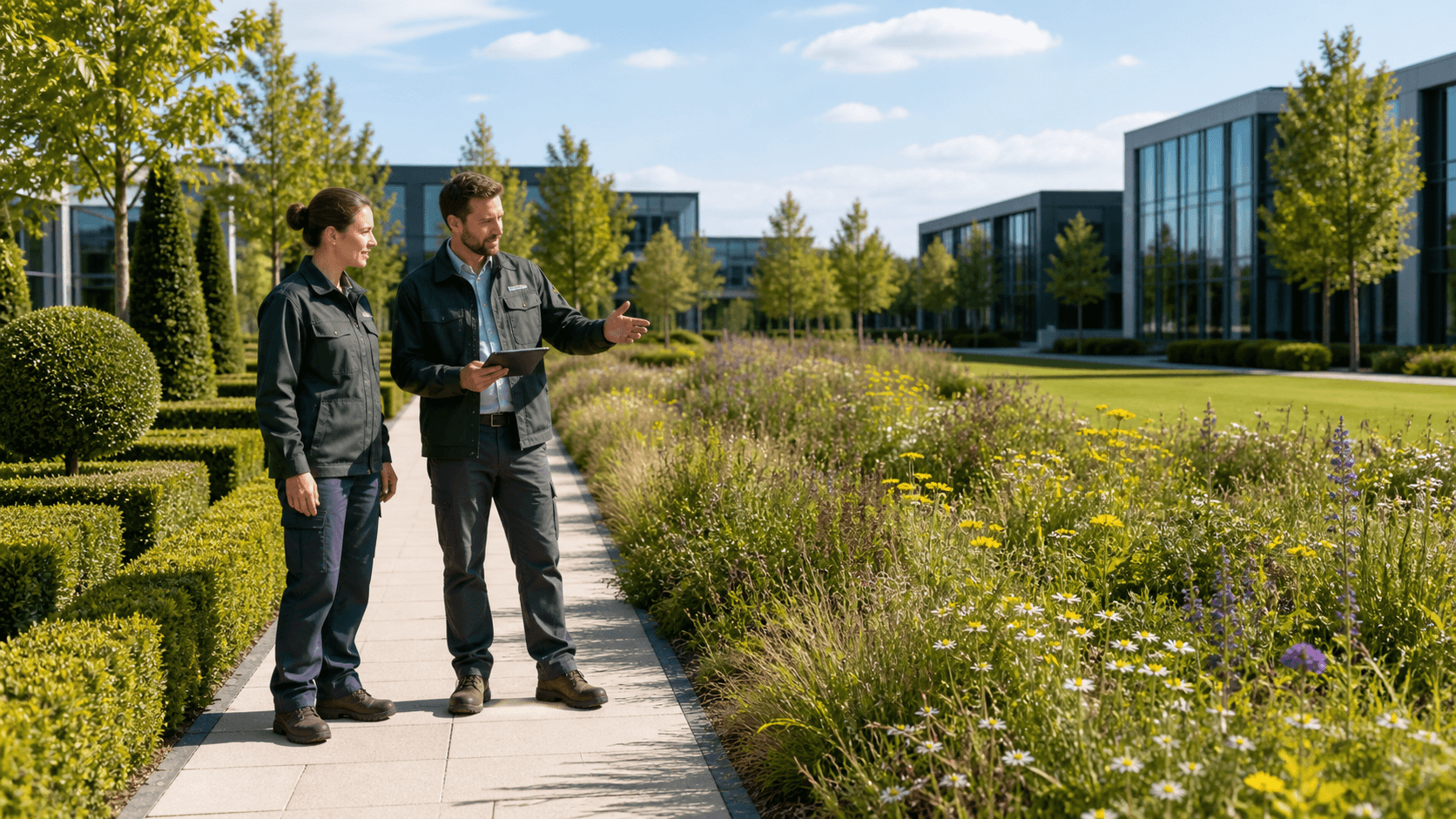
Structured borders can make entrances and communal spaces feel welcoming, while natural habitat areas can bring colour, movement and ecological interest to quieter parts of a site. The best result is rarely one approach across every metre of ground. It is a considered mix that supports people, nature and practical day-to-day management.
Amenity planting suits prominent, regularly used areas such as office frontages, school grounds, managed developments and business parks. Wildflower areas are often better for verges, boundaries, embankments and land that does not need a formal finish. We shape recommendations around your users, safety needs, branding, environmental aims and seasonal grounds programme.
Match Planting to How Each Space Is Used
Before choosing plants or seed mixes, we consider how people move through the site. A reception entrance needs a different feel from a school perimeter, a shared residential garden or the edge of a sports environment. Clear access, sightlines and a sense of care all matter.
For high-profile locations, amenity planting gives a neat and dependable appearance. Evergreen shrubs can hold structure through winter, while perennials, specimen trees and seasonal planting add interest at different times of year. These areas can help create a strong first impression without getting in the way of daily activity.
Wildflower planting works well where habitat value can take priority over a polished, formal look. Broad grass margins, unused corners, estate boundaries and buffer zones can all become useful areas for flowering plants and longer grass, while leaving the main working areas clear.
When we review a site, we pay close attention to:
- Pedestrian routes, entrances and accessible paths
- Car parks, road junctions and driver visibility
- Signage, lighting and CCTV coverage
- Play areas, sports spaces and maintenance access
- Boundaries where planting can soften the setting without blocking views
Planting should never create hidden corners, obstruct signs or make routine grounds work harder. A well-positioned bed or meadow area feels natural because it fits the site, not because it has simply been placed in spare ground.
Compare Appearance, Maintenance and Whole-Life Value
Both styles of planting need care. The difference lies in the type of work required, when it happens and what you expect the area to look like across the seasons.
Amenity planting usually calls for regular attention. Weeding, pruning, mulching, feeding, irrigation and replacement planting all help keep borders looking tidy and full. That ongoing input creates reliable structure, colour and presentation, especially in spaces that visitors, staff, residents or pupils see every day.
Wildflower areas may need less frequent mowing once they are established, but they are not a no-work option. Good results begin with suitable soil preparation and a seed mix matched to the ground conditions. During establishment, weed control is particularly important. Later, seasonal cuts and removal of arisings help prevent the area becoming dominated by coarse grass or unwanted plants.
Appearance needs managing as carefully as the plants themselves. Wildflower areas can look rough outside their main flowering period if there is no visible sign of management. Simple details help show intent, including crisp edges, mown paths and clear boundaries between formal and natural areas.
Build Ecology Into Commercial Landscaping in Oxfordshire
Wildflower planting can play a useful part in a wider habitat plan. Native flowers, flowering shrubs, trees and longer-grass areas may provide food, cover and shelter for insects, birds and small mammals. However, plant choices should always suit the site's soil, drainage, light levels and practical needs.
Rather than treating a meadow patch as a stand-alone feature, we often consider how it connects with the rest of the grounds. A linked approach can make better use of land that is already less intensively managed.
Helpful features may include:
- Native hedgerows along boundaries
- Tree planting in suitable open spaces
- Reduced mowing zones away from busy routes
- Log piles in discreet, appropriate locations
- Bird boxes where they can be safely maintained
Professional commercial landscaping in Oxfordshire helps keep these measures realistic. Ecology should support the way a site operates, rather than introduce new access issues, safety concerns or maintenance burdens. With a clear plan, habitat areas can sit comfortably beside smart entrances, maintained lawns and active outdoor spaces.
Plan Autumn Work for Stronger Spring Growth
Autumn is a useful point to step back and assess what has worked over the summer. By September, gaps in planting, dry areas, compacted ground and drainage problems are often easier to spot. It is also a good time to review whether mowing patterns are helping or limiting wildflower and habitat areas.
A site assessment can identify failed plants, invasive weeds, worn edges and areas where a change in maintenance approach would make a difference. Addressing these points before winter gives planting and grounds programmes a firmer base for spring.
Cooler conditions and seasonal rainfall can support work such as tree and hedge planting, bulb installation, soil improvement and preparation for selected wildflower areas. Timing still needs to reflect the weather and the planting specification, but early planning helps avoid rushed decisions when the growing season returns.
Turn a Planting Plan Into Measurable Value
The right mix of amenity planting and wildflower areas can give your grounds a professional appearance while making room for nature. Review high-profile spaces, underused corners, movement routes and maintenance demands together, rather than treating each area in isolation.
A clear plan helps you decide where formal planting will have the greatest impact and where lower-intervention habitat can add value. With seasonal work scheduled in advance, your grounds can remain practical, attractive and easier to manage through changing weather and growing conditions.
Create A Landscape That Works Harder
HumphriesTrio Grounds Maintenance can help you balance presentation, biodiversity and ongoing maintenance requirements across your site. Discover our approach to commercial landscaping in Oxfordshire for grounds designed around your practical priorities. To discuss your requirements with our team, contact us today.