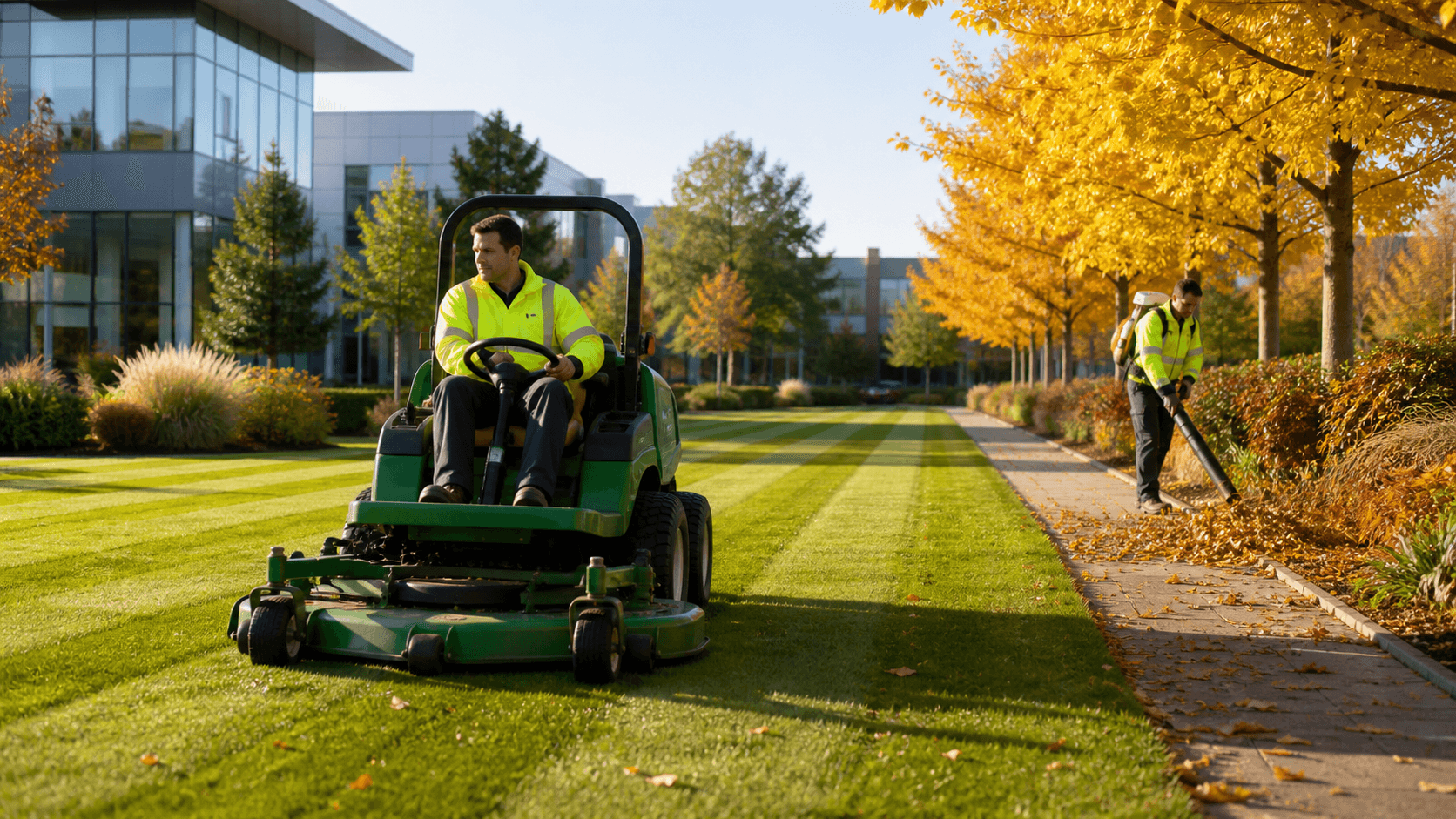
Autumn weather can turn an ordinary grassed area into a safety concern surprisingly quickly. Rain, heavy dew, falling leaves and darker mornings all affect how people move around commercial sites. When grass is left unmanaged, it can hide hazards, hold moisture and make routes around buildings less clear.
We treat planned mowing as part of wider seasonal grounds care, not simply a way to make a site look tidy. At HumphriesTrio Grounds Maintenance, we support estates, business parks, schools, developments and sports environments across Oxfordshire and the South of England with grounds management that keeps changing conditions in mind.
Keep Autumn Grounds Safer Before Hazards Escalate
Mild, damp spells can keep grass growing well into autumn, even when leaf fall is increasing and rainfall becomes more frequent. If mowing schedules are not reviewed, grass can quickly become long, wet and flattened, especially around less-used edges of a site.
A well-kept lawn helps create a safer, more professional setting for everyone using your grounds, including staff, visitors, pupils, residents and contractors. It also gives us a clearer view of the condition of the turf, paths and surrounding areas, making it easier to spot developing issues before they affect access.
When we plan commercial grass cutting in Oxfordshire, we consider more than appearance. Ground conditions, footfall, weather patterns and the purpose of each area all help shape the right approach.
Commercial Grass Cutting in Oxfordshire Reduces Slip Risks
Long, wet grass can make even familiar routes harder to use safely. It may lean over path edges, hide uneven ground or keep moisture close to pedestrian areas. Around car parks, entrances and building perimeters, this can lead to muddy shoes, slippery paving and unclear walking routes.
Regular mowing helps keep a clean distinction between grassed areas and hard surfaces. This makes kerbs, path edges and access points easier to see, particularly during wet mornings or darker afternoons.
Areas that often need close attention include:
- Paths leading from car parks to building entrances
- Grass verges beside internal roads and loading areas
- Recreational spaces used by pupils, residents or visitors
- Lawn edges around external seating, bin stores and facilities
A fixed mowing plan is not always the best answer in autumn. We monitor how quickly grass is growing and assess whether turf is too wet for certain equipment. This allows us to keep areas manageable without causing unnecessary damage to waterlogged ground.
Responsible mowing also helps limit mud transfer. When people walk through long or saturated grass, soil can be carried onto paving, steps and entrance mats. Keeping turf at an appropriate height can reduce that problem and support cleaner access routes.
Clear Sightlines Support Safer Movement and Security
Overgrown grass can make a site harder to read. Low obstacles, dropped litter, uneven patches and damaged edging may be hidden until someone is already close to them. That creates avoidable risks for people walking through the grounds and for teams carrying out regular maintenance.
Clearer verges and lawns also help drivers, cyclists and pedestrians see one another around access roads, crossings and corners. This matters around school drop-off areas, business park routes, development entrances and sports facilities, where people may arrive during low light.
Well-managed grass can support better site awareness by keeping these areas more open:
- Fencing and boundary lines
- Building entrances and side access routes
- Car park edges and pedestrian crossings
- External storage areas and bin store approaches
- Footpaths beside trees, shrubs and site furniture
Neat, open grounds can also make it easier for facilities teams to notice changes. A damaged fence panel, a blocked route or a patch of disturbed turf is much more likely to stand out when long grass is not concealing it. We see grass cutting as one useful part of a wider approach to maintaining safe, visible outdoor spaces.
Managed Grass Makes Leaf Clearance More Effective
Leaf clearance becomes much easier when grass is maintained at a sensible height. Leaves sitting on short, cared-for turf are easier to see, collect and remove before they become compacted into a wet, slippery layer.
This is particularly useful near drains, entrances, parking areas and paths. Wet leaves can hide kerbs, potholes, drainage channels and uneven edges. When they settle into long grass, they can also trap moisture against the ground and create muddy patches that spread into nearby pedestrian areas.
Keeping grass under control lets us identify where leaves repeatedly gather. Those patterns can point to areas that need more frequent attention, especially beneath trees or where wind pushes debris towards a building entrance.
Autumn mowing also helps us assess drainage more clearly. If water is pooling on a lawn or moving towards paths and doorways, it is easier to spot when grass is not long and flattened. Early attention to these conditions can help site teams plan ahead before wetter weather makes access more difficult.
Protect Turf and Limit Winter Ground Damage
Autumn grass cutting is not about cutting every lawn as short as possible. Grass that is cut too low can struggle during wet, cold conditions, while grass left too long can flatten under rain and create damp surfaces. We adjust cutting height and methods according to the condition of the turf and how the area is used.
Equipment choice matters just as much. Heavy machinery on wet ground can compact soil, leave ruts and damage grass cover. Those ruts may become standing-water spots or trip hazards as winter weather arrives.
For high-footfall sites, protecting the turf in autumn can help reduce problems later on. Healthier grass is better placed to cope with changing weather, regular use and the pressure of people crossing lawns near paths and entrances. This can limit bare patches, muddy routes and repair work when spring arrives.
Prepare Your Grounds for a Safer Autumn Season
A safer autumn site starts with planned maintenance rather than waiting for long grass, wet leaves or muddy access routes to become a problem. We recommend reviewing mowing arrangements alongside leaf clearance, drainage checks and the pedestrian areas that receive the most daily use.
By keeping grass at an appropriate height and responding to changing ground conditions, you can make your outdoor areas clearer, cleaner and safer throughout the season.
Keep Your Grounds Professionally Managed This Autumn
At HumphriesTrio Grounds Maintenance, we provide reliable commercial grass cutting in Oxfordshire tailored to the needs of your site. Our team can build a practical maintenance schedule that supports a tidy, accessible outdoor environment all season. Contact us to discuss your grounds maintenance requirements.