Keep Your Business Park Safe, Smart and Autumn Ready
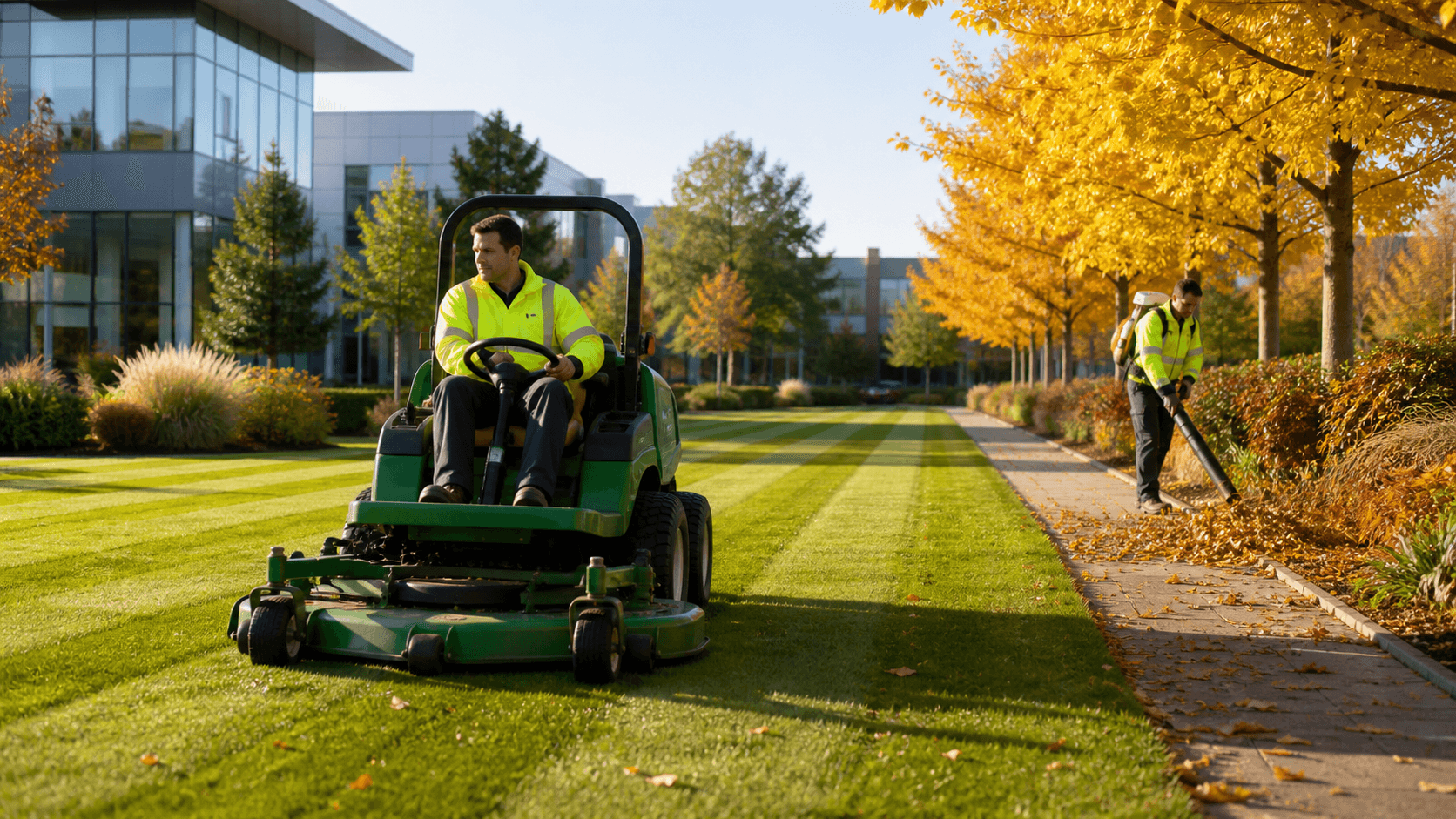
Autumn is a useful time to prepare a business park for the wetter, windier months ahead. From late September, leaf fall, heavy rain and changing ground conditions can quickly affect paths, car parks, lawns and planted spaces. By planning early, we can help you deal with seasonal pressures before they turn into blocked drains, muddy entrances or unsafe walkways.
For business park grounds maintenance in London, a coordinated programme makes day-to-day management easier. Clean communal areas, clear access routes and healthy green space support a professional setting for tenants, employees, visitors and deliveries. Rather than reacting to problems as they arise, we recommend setting priorities, reviewing the whole estate and planning works around how your site operates.
Audit Every Zone Before the Weather Changes
A full site inspection gives us a clear starting point for autumn work. Larger business parks can include roads, visitor parking, footpaths, boundary hedges, lawns, planted beds, drainage channels, trees and shared outdoor areas. Each zone can respond differently to rain, leaf fall and regular foot traffic, so a single walk-round is not always enough.
Tree checks should focus on deadwood, weak limbs, low branches and any signs that access could be affected in poor weather. Areas near building entrances, parking bays, paths and seating need particular attention because problems there can interrupt normal site use.
We also look closely at hard surfaces and water flow. Leaves can build up quickly in gullies, grates and channels, while moss, algae and standing water can make routes slippery. An autumn audit should identify:
- Urgent tree, access and drainage issues
- Known flood points and areas of standing water
- Compacted or worn grass near paths and entrances
- Surfaces needing leaf, moss or algae clearance
- Longer-term planting, turf or habitat improvements
Once these points are recorded, you have a practical list that separates urgent safety tasks from routine seasonal work and future projects. This helps managing agents, site teams and contractors understand responsibilities, timing and likely disruption.
Coordinate Access, Contractors and Tenants
Business parks do not pause while grounds work takes place. Vehicles still need to reach loading bays, visitors need parking, and employees need safe routes between buildings. That is why we plan access arrangements before machinery, vehicles or specialist teams arrive on site.
Early communication is especially helpful where leaf clearance, hedge cutting or tree work could temporarily affect a footpath, visitor space or delivery route. Security teams, tenants and on-site contractors should know where work zones will be, how pedestrians will be guided safely and whether there are any short-term parking restrictions.
A seasonal works calendar keeps everyone informed without overloading them with detail. Depending on the site, it may include:
- Regular leaf removal from paths, entrances and car parks
- Drainage inspections and clearance visits
- Planned tree surveys and approved tree works
- Turf treatments for lawns and recreational areas
- Seasonal planting and managed habitat work
Some jobs are better suited to quieter periods, such as early mornings, weekends or other lower-footfall times. In London, where access can be tighter and neighbouring properties closer, we take extra care with vehicle movements, noise, pedestrian controls and keeping public-facing entrances tidy throughout the work.
Prioritise Trees, Lawns and Water Management
Leaf clearance is one of the most visible autumn jobs, but it should not be treated as an occasional tidy-up. When leaves are left to gather on paths, they can become slippery. On lawns, they may smother grass and hold moisture against the surface. Around gullies and drains, they can prevent water from moving away as intended.
Tree and hedge care also needs a planned approach. Condition surveys can identify deadwood, low branches and growth that affects access or visibility. Where work is appropriate, we can schedule pruning or crown lifting around the needs of the site. Before tree or hedge work begins, ecological considerations should always be reviewed, particularly where nesting birds, bats or other protected species may be present.
Autumn can also be a good period to support tired grass after summer dryness, heavy use or compaction. Depending on the condition of the area, professional turf work may include aeration, scarification, overseeding and suitable seasonal feeding. These treatments can help lawns and informal green spaces recover before winter conditions set in.
Water management should sit alongside turf care, not separately from it. We recommend inspecting drainage channels, soakaways, swales and other drainage features for debris, erosion and standing water. Keeping these areas clear helps protect planted spaces, grassed areas and the wider infrastructure when rain arrives in force.
Balance Presentation, Wildlife and Recreation
A well-kept estate does not need to mean every area is managed in exactly the same way. High-visibility spaces around entrances, offices and shared paths often need regular mowing, edging, litter picking and seasonal planting. Meanwhile, less-used boundaries, woodland edges and selected grass areas can be managed with wildlife in mind.
Leaving some longer grass, seed heads or leaf litter in suitable zones can provide cover and food for insects, birds and small mammals. The important point is that these choices look intentional. Clear edges, tidy paths and defined planting areas show that the site is being cared for, while giving nature room where it makes sense.
Sports pitches, recreation lawns and informal employee spaces need their own autumn plan. Worn turf, compacted ground and poor drainage can affect how these spaces cope with wetter weather. We recommend scheduling repairs and treatments around expected use, whether the area is used by employees, visitors or local groups.
Regular reporting also helps you show the value of the work taking place. Photographs, visit records and clear notes on completed tasks give facilities managers useful information to share with owners, tenants and estate teams. Clean entrances, healthy planting and safe routes all shape how people feel about the site.
Turn Your Autumn Plan Into Year-Round Care
A good autumn audit should lead to a clear action plan, with urgent tree, drainage and access issues addressed first. From there, recurring leaf clearance, turf recovery, planting and habitat management can be scheduled around changing weather and site activity. We find that regular reviews are important because rainfall, wind and leaf fall rarely follow a fixed timetable.
The most reliable plan remains flexible. Increasing visits during wet or windy spells while keeping improvement work moving forward helps your business park stay safe, presentable and ready for winter without relying on last-minute fixes.
Keep Your Business Park Looking Its Best
HumphriesTrio Grounds Maintenance can provide dependable business park grounds maintenance in London tailored to your site's seasonal needs. Our team can coordinate routine care and planned works around your priorities. To discuss a maintenance programme for your park, contact us today.