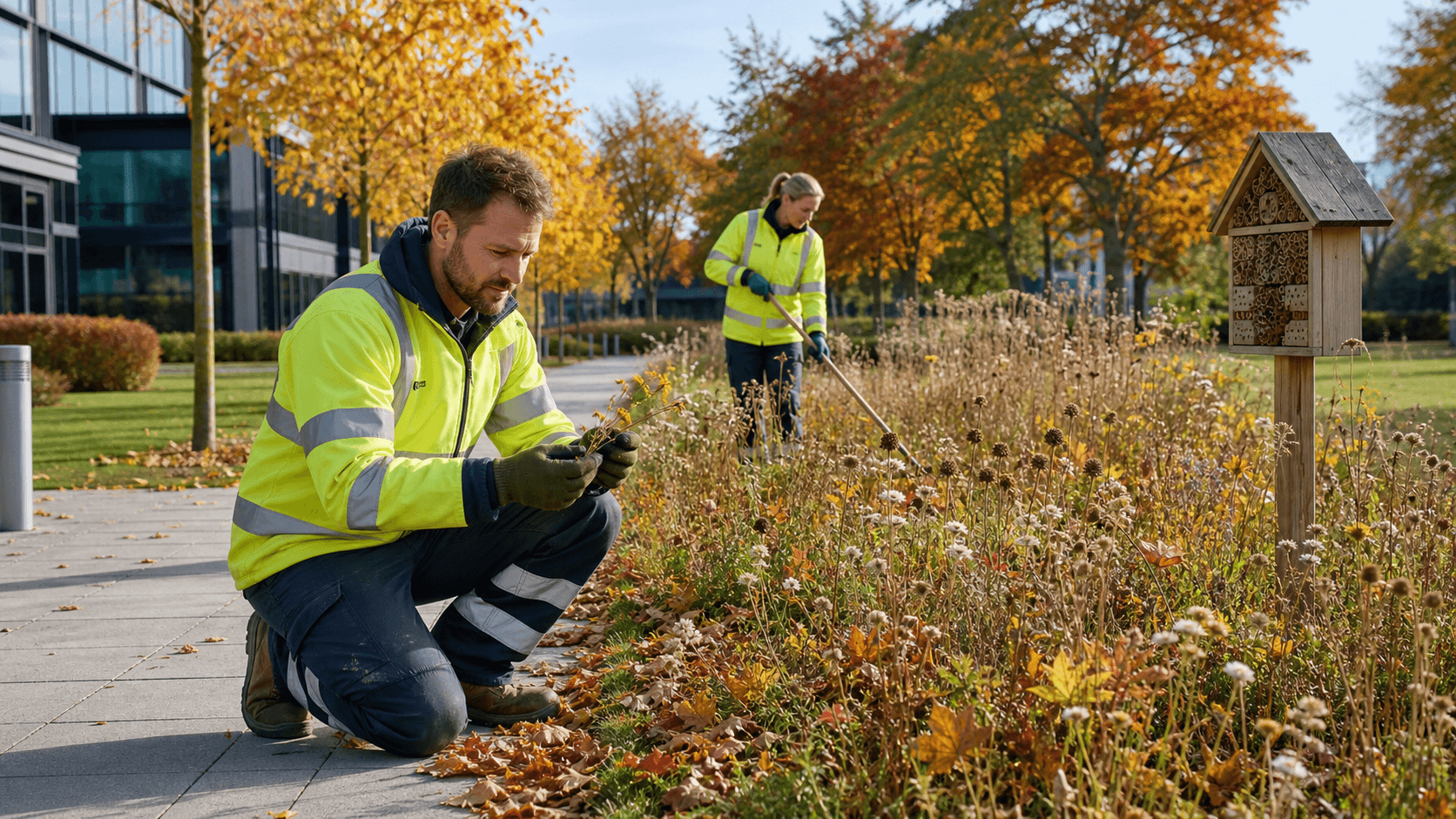
October Reporting for Facilities Management Grounds Maintenance
October is the point when outdoor areas begin to show how well they will cope with winter. Growth slows, leaves gather, rain becomes more frequent and small defects can quickly turn into access, safety or presentation problems. We use clear October reporting to help you see the true condition of your grounds before colder weather makes planned work harder.
For facilities management and grounds maintenance, a report should do more than confirm completed visits. It should give you a practical view of risks, priorities and upcoming work across every part of your site.
Turn Site Data Into Confident Winter Plans
A thorough October inspection gives us the chance to identify concerns while there is still time to act. Blocked drains, overgrown routes, worn paths and weakened trees may not appear urgent on a dry day, but wet weather, high winds and frost can soon expose the problem.
During inspections, we look beyond routine appearance. Access routes, entrances, boundaries, parking areas and outdoor communal spaces all need to support safe day-to-day use. Where issues are found, we can record their location, likely impact and recommended action, helping you make decisions before reactive work becomes necessary.
Useful October reports can identify matters such as:
- Drainage channels, gullies or grates affected by leaves, debris or standing water
- Vegetation limiting visibility around roads, footpaths, signs and building entrances
- Damaged hard surfaces that may become slippery or uneven in wet conditions
- Trees or branches that need closer inspection before stormier weather arrives
- Turf areas showing wear, compaction, disease or poor drainage
This information supports better budget planning. It also helps separate ordinary seasonal changes from work that needs prompt attention. For estates, schools, business parks, sports facilities and managed developments, that distinction can make winter planning far simpler.
Record Autumn Conditions Before Weather Changes
Leaf fall is one of the clearest signs of autumn, but it should not be treated as a purely visual issue. Wet leaves can cover uneven surfaces, block gullies and create slippery entrances. When they collect in car parks, paths and access points, they can also affect how people move safely around the site.
Our reports should record conditions while they can be assessed properly. Photographs and precise location references help show whether a concern is isolated or repeated across a site. They also give facilities teams a useful record when conditions change after heavy rain or strong winds.
Trees and shrubs deserve the same attention. Broken branches, deadwood, low canopies and vegetation encroaching on roads or footpaths can affect safe access. Recording these observations early allows specialist operations to be planned in a controlled way, rather than arranged at short notice after a weather event.
Sports surfaces, lawns and planted areas should also be reviewed. Summer use can leave turf compacted, thin or damaged, while wet conditions may reveal drainage weaknesses that were less obvious earlier in the year. October findings can guide suitable professional work, including aeration, overseeding, soil improvement and habitat-sensitive maintenance where appropriate.
Connect Grounds Reports with Facilities Priorities
Grounds work has a direct link to wider site management. A drainage problem may affect access and business continuity. Vegetation growing across a camera line or sign can create a security concern. Damaged paving can become a health and safety issue. Good reporting makes those links clear, so that outdoor maintenance is considered alongside your wider operational responsibilities.
Rather than receiving a list of observations with no context, you should be able to understand what each issue means. We recommend reports that set out the condition, location, impact, recommended action and suitable timescale. This makes them easier for property managers, site teams and budget holders to review together.
A clear report can include:
- A photograph showing the condition and surrounding area
- A location reference that allows the issue to be found quickly
- A priority rating based on safety and operational impact
- A recommended scope of work and the reason for it
- A record of completed maintenance, such as leaf clearance or pruning
Completed activities matter as much as identified risks. They show what has already been done to protect access, presentation and site condition. A transparent record also helps you understand the value of planned maintenance, rather than seeing grounds work only when something goes wrong.
Prioritise Risks Across Every Managed Site
Not every October observation needs immediate action. The purpose of reporting is to help you put work in the right order, based on risk, operational need and the likely effect of delay. A blocked emergency route or an unsafe branch calls for a different response from a boundary area that would benefit from seasonal attention later in the programme.
Site type should shape those decisions. At a school, safe pedestrian routes and clear play areas may be the main concern. For a business park, vehicle access, entrances and a tidy external appearance may take priority. Sports facilities need close attention to surface condition, drainage and wear. Managed developments may require focus on shared walkways, resident access and communal areas.
Before severe frost or a prolonged wet period arrives, we recommend reviewing tasks that could become more difficult once weather conditions worsen. These may include drainage clearance, leaf management, tree inspections, securing loose materials, reducing vegetation obstruction and preparing winter access arrangements.
Consistency is particularly helpful when you manage more than one location. Standardised reporting allows us to compare similar areas, recognise recurring faults and show where a small planned action could prevent repeated disruption.
Turn Findings Into Budgets and Work Orders
An October report becomes most useful when it leads directly to clear work orders. We separate recurring planned maintenance from one-off remedial work, giving you a better view of routine service needs alongside additional site-specific requirements.
Each proposed task should explain what needs doing, why it matters and when it should happen. Clear scopes reduce uncertainty when work needs approval or coordination with other suppliers. They also allow facilities teams to plan winter and early spring expenditure with fewer surprises.
For example, reports may identify likely requirements for ongoing leaf clearance, drainage maintenance, tree work, hard-surface repairs, planting activity or sports pitch recovery. A priority-based plan makes it easier to approve urgent items first while scheduling lower-risk work for the right seasonal window.
Build a Stronger Winter Maintenance Programme
Regular review meetings help keep reports useful after the inspection is complete. As weather conditions change, we can revisit priorities, confirm completed actions and adjust planned work where a new issue affects safety or access. This is especially helpful across complex commercial sites throughout Oxfordshire and the South of England.
The best winter programmes are built from what the site is showing now, not from assumptions made after problems have developed. When observations are clear, priorities are agreed and work is planned in good time, you can protect access, maintain a well-kept site and reduce avoidable reactive maintenance.
Turn October Findings Into A Practical Winter Plan
HumphriesTrio Grounds Maintenance can help you translate your reporting into reliable facilities management and grounds maintenance support tailored to your site. Our team works with you to address seasonal priorities before they disrupt day-to-day operations. To discuss your requirements and arrange a review, contact us today.