Keep Your Wiltshire Site Safe Through Autumn Rain
October rain can quickly change the condition of commercial grounds in Wiltshire. Across business parks, schools, managed estates and sports spaces, we often see waterlogged grass, leaf-covered paths, standing water and reduced access for maintenance equipment.
Wet weather is not simply an inconvenience to a routine schedule. If mowing, clearance work or drainage checks are delayed for too long, your site may face slippery surfaces, compacted ground, poor presentation and avoidable repair work later in the season. A responsive commercial grounds maintenance plan helps us protect the people using your site while keeping outdoor areas orderly through autumn and into winter.
See Why Saturated Ground Changes Every Maintenance Task
After prolonged rain, the ground can become soft and unstable. Grass may look ready for a cut, but mowing on saturated turf can leave wheel marks, ruts and uneven areas that take time to recover. Repeated vehicle movements and foot traffic can press wet soil together, making it harder for air and water to move through it.
For commercial grounds maintenance in Wiltshire, we assess the firmness of the ground, grass growth and the weather forecast before deciding how to proceed. Damp grass clippings can gather in heavy clumps, which may smother the turf beneath. Cutting too low in poor conditions can also scalp the surface and leave bare patches.
Rain can affect more than lawns. Restricted machine access, poor visibility and standing water may mean we need to change the order of planned work. Postponing a task is sometimes the most responsible choice when it prevents longer-lasting damage to your grounds.
Protect Access Routes, Lawns and Sports Surfaces
During wet spells, access routes often need the closest attention. Entrances, footpaths, steps, car parks and communal walkways can become slippery when wet leaves, mud, moss or surface water build up. Regular clearance makes these spaces feel cared for and helps reduce obvious hazards for employees, pupils, residents, visitors and sports users.
We may prioritise work such as:
- Clearing leaves and debris from paths, entrances and hard surfaces
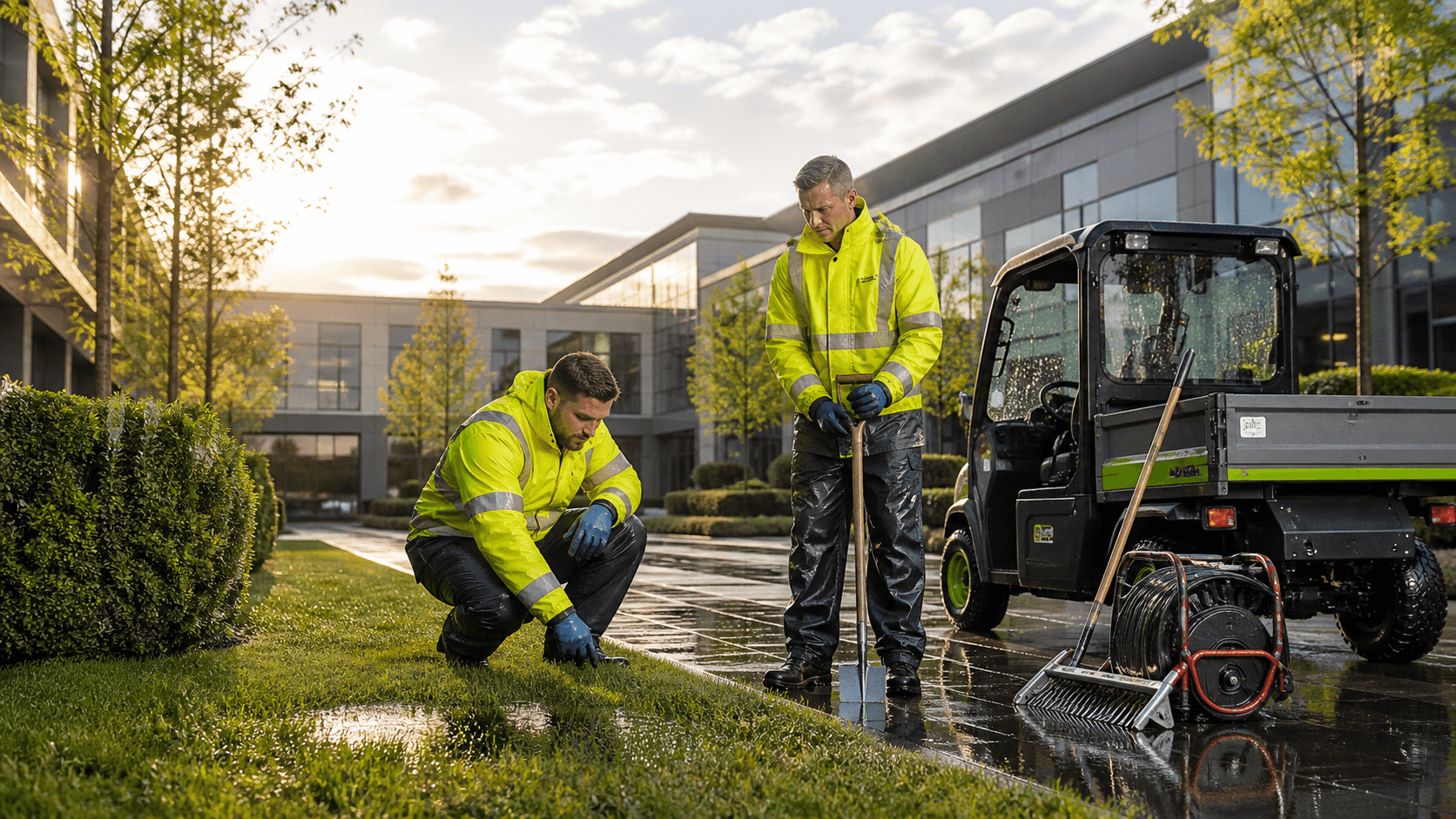
- Checking gullies, drains and low points where water gathers
- Removing mud from busy walkways and access areas
- Inspecting steps, ramps and shared routes for slippery conditions
Lawns and planted areas also need protection. Wet soil loses its structure more easily, so heavy machinery, parked vehicles and repeated pedestrian traffic can cause damage that remains visible long after the rain has stopped. Where conditions require it, we can plan visits around suitable access routes and use an approach that puts less pressure on vulnerable ground.
Sports turf deserves particular care. School fields, recreational lawns and playing surfaces can become unsafe or unplayable when water sits on the surface. Condition checks, drainage monitoring, debris removal and measured recovery work can help prevent a short wet period from affecting availability later in the season.
Plan Flexible Visits Around Wiltshire Weather Windows
A fixed calendar does not always suit autumn weather. Rainfall can vary greatly from one day to the next, so we plan commercial grounds maintenance in Wiltshire around safe opportunities to complete the right work at the right time.
When turf is too wet for mowing or heavier equipment, we can focus on tasks that are less affected by rainfall. This keeps the visit productive while protecting lawns and other soft-ground areas from unnecessary pressure.
Depending on site conditions, suitable wet-weather priorities may include:
- Litter picking and general site tidying
- Leaf clearance from hard surfaces and entrances
- Visual safety inspections of paths, trees and planted areas
- Drain and gully checks after heavy rainfall
- Pruning and seasonal care where conditions allow
Clear communication makes this easier. When you share school timetables, site events, delivery times, public access arrangements or known drainage concerns, we can plan around them with less disruption. Monitoring local forecasts also helps us respond quickly after storms, before blocked gullies or leaf-covered paths turn into wider site problems.
Restore Healthy Grounds After Prolonged Rainfall
Once the ground begins to dry, recovery should be gradual. A lawn that has been under water stress or heavy foot traffic may need a careful first cut at a higher height, followed by the removal of built-up debris and a return to normal visits over time. Rushing back into regular mowing can weaken already stressed turf and leave the surface looking uneven.
Repeated standing water can point to an issue that needs closer attention. Compacted soil, blocked drainage channels, worn routes and poor water flow across a site can all affect how quickly grounds recover after rain. By identifying the likely cause, we can help you plan sensible improvements before winter weather puts more strain on the area.
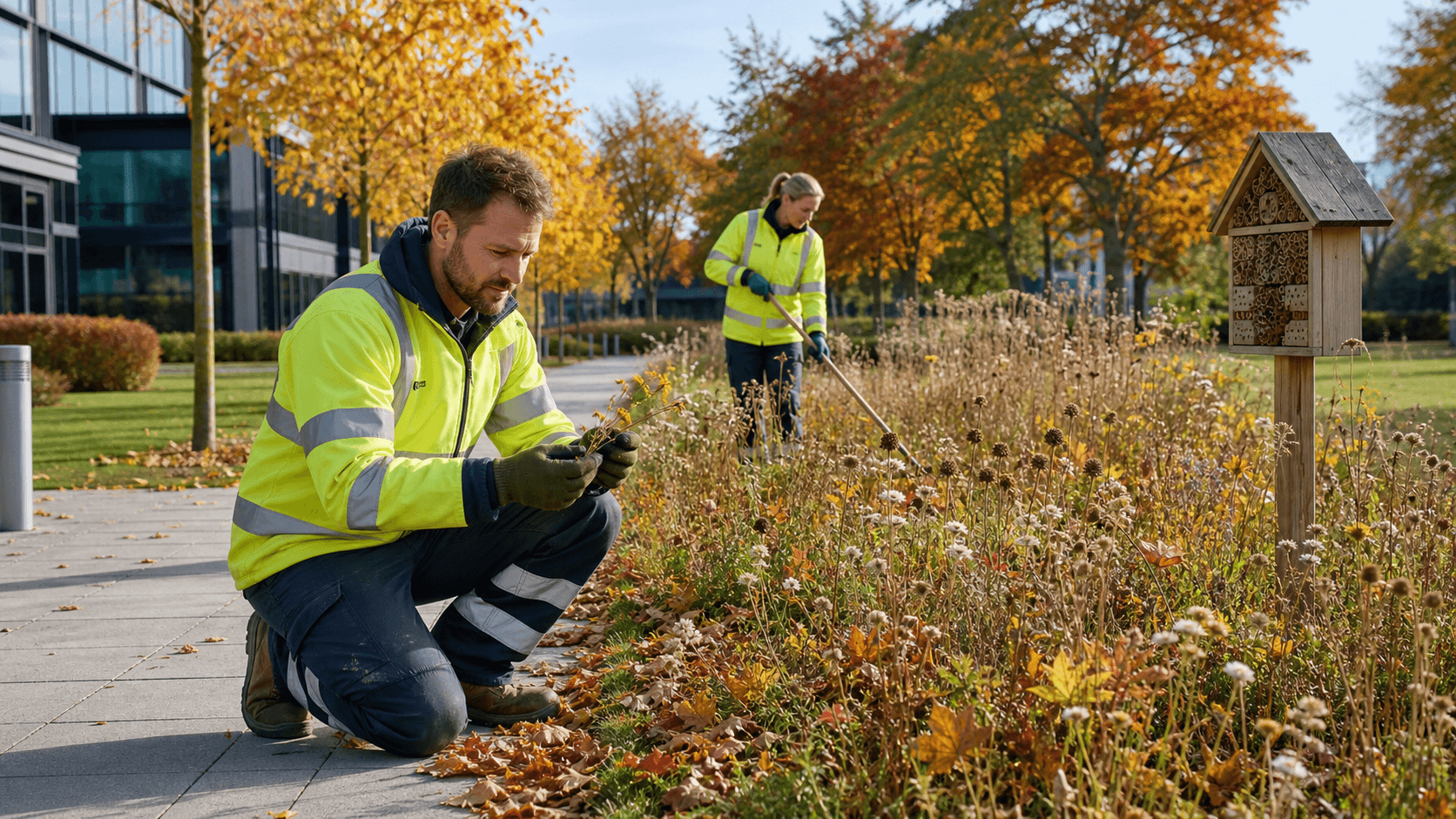
Autumn is also a useful time for us to review beds, shrubs, trees and habitat areas. Heavy rain may wash away mulch, expose soil, bend branches or encourage unwanted growth. Our habitat management and landscaping work can support a tidy appearance while respecting the needs of natural areas on your site.
Recovery plans should always suit the setting. A business park entrance may need a smart, clear approach for visitors, while a school field may need protection from overuse. Managed estates and residential developments often require safe shared access alongside well-kept green space.
Prepare a Weather-Ready Plan Before Winter
As autumn rain continues, it is worth reviewing whether your current programme allows for inspections, flexible scheduling, leaf and debris clearance, drainage awareness and turf protection. Routine work matters, but a plan also needs room to respond when conditions change quickly.
The best approach is to act early, keep access routes clear and avoid forcing machinery onto saturated ground. With regular checks and carefully timed maintenance, you can reduce disruption, protect the condition of your grounds and help your site stay safer and presentable through the wetter months.
Keep Your Commercial Grounds Ready For Every Season
HumphriesTrio Grounds Maintenance provides dependable commercial grounds maintenance in Wiltshire tailored to the needs of your site. We can help you maintain a professional appearance while supporting safe access for staff, visitors and customers. Contact us to discuss a maintenance plan for your grounds.