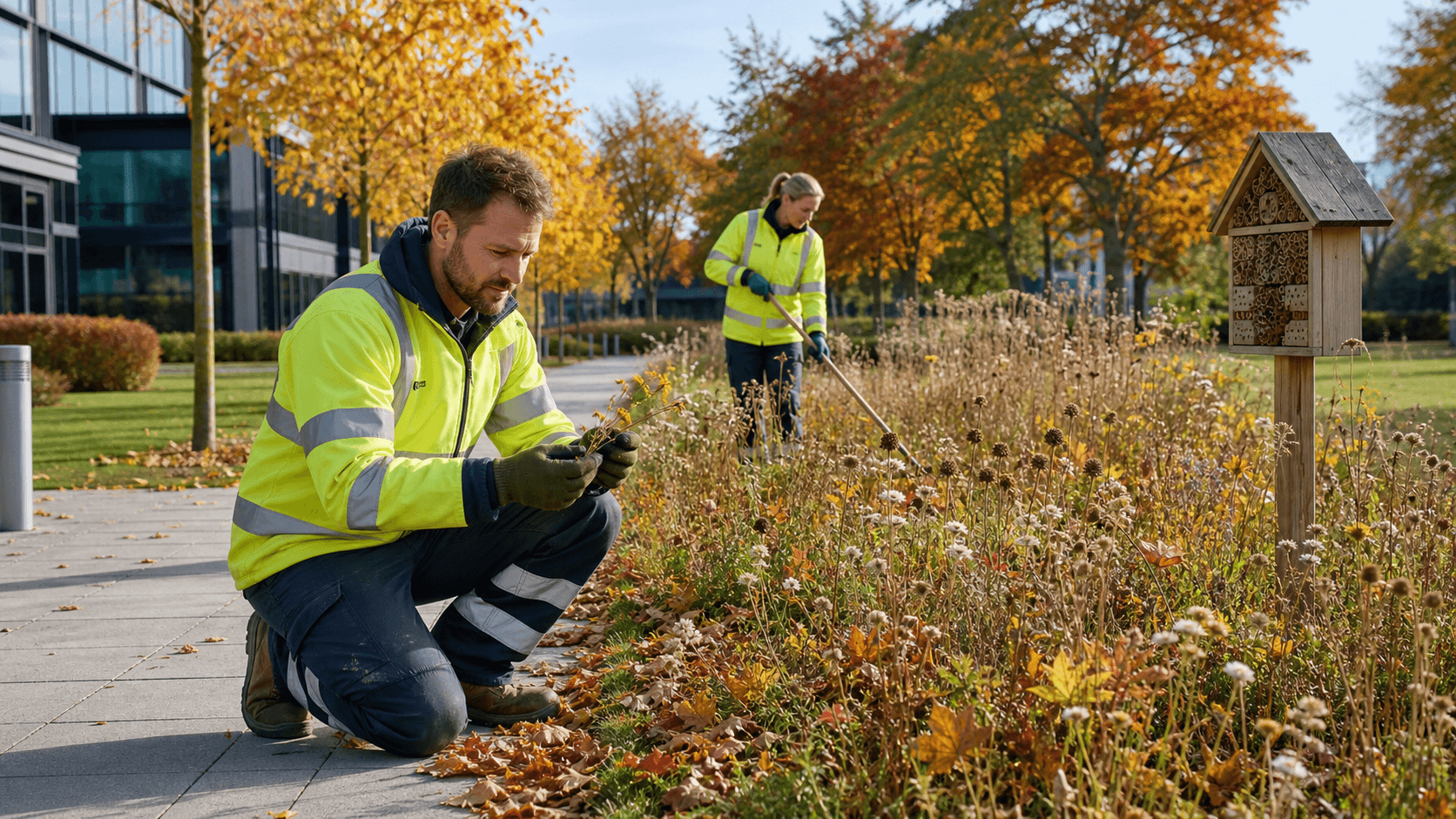
Biodiversity areas need a different approach from formal lawns, roadside verges and ornamental beds. In autumn, a site can still look cared for without every surface being cut short, cleared bare or made identical. The aim is to protect the natural features that make an area useful for wildlife while keeping your grounds safe, tidy and practical.
October is an important turning point. Plants are dropping seed, small animals are looking for cover, insects are settling into sheltered places, and wetter ground is more easily damaged. We plan autumn maintenance around those changes, rather than applying one standard schedule across an entire site.
Protect Habitat Value Before Autumn Weather Arrives
Conventional autumn maintenance often focuses on tidiness. That may mean broad mowing, heavy leaf clearance and widespread pruning. Those tasks have their place in formal areas, entrances, paths and highly used spaces, but they are not always right for meadows, woodland margins, pondsides or scrub areas.
For biodiversity spaces, we look at what each part of the site is doing before deciding what work is needed. Seed heads can feed birds. Long grass can give small mammals cover. Dead stems may shelter insects. Fallen leaves and branches can become part of a healthy habitat when they are left in the right place.
A planned approach is particularly helpful on estates, business parks, schools, housing developments and public grounds. It can help you show that your site is being managed responsibly, while still meeting the standards expected by visitors, residents, staff and site users.
Rather than following a one-size-fits-all programme, we consider:
- Which areas need regular mowing and which should be cut less often
- Where pruning or scrub clearance may disturb shelter or food sources
- Which access routes need to remain clear in wet weather
- How green waste can be handled without removing useful habitat material
This helps us separate areas that need a neat finish from those that benefit from a lighter touch.
Time Cuts and Clearance Around Wildlife Cycles
Timing is one of the biggest differences in biodiversity grounds management in Gloucestershire. A late autumn cut may be suitable in one grassland area but harmful in another, depending on the plants present, the site's management plan and the shelter available nearby.
Selective mowing can prevent grassland from becoming dominated by coarse growth without removing every refuge area at once. Phased cutting leaves parts of a meadow or margin standing while other sections are managed. Where appropriate, some grass can remain uncut over winter, providing seed and cover until spring work is planned.
Leaf clearance also needs judgement. Leaves on paths, steps and busy entrances can create a slip risk, so they should be removed. Thick layers of leaves on valuable grassland may smother smaller plants, and cut vegetation left in place can change the balance of a meadow. Yet clearing every leaf pile, dry stem and fallen branch from a habitat edge can take away the shelter wildlife needs.
Before work begins, we carry out checks around cutting, hedge maintenance and scrub clearance. Sensitive areas can be marked, exclusion zones can be agreed and work can be moved to another part of the site when conditions call for it. This reduces unnecessary disturbance and gives every task a clearer purpose.
Create Autumn Plans for Soil, Water and Shelter
Healthy habitat starts with healthy ground. Autumn rain can quickly turn firm soil into soft, vulnerable ground, especially around meadow edges, woodland paths, wetland areas and low-lying spaces. Heavy machinery, repeated vehicle movements and uncontrolled footfall can leave ruts, compact soil and damage vegetation that may take time to recover.
We plan routes and machinery choices carefully to reduce pressure on sensitive ground. Designated access routes help keep vehicles out of areas that do not need to be crossed, while work can be timed around wetter conditions where possible. This is especially important when routine estate work sits close to more natural areas.
Water management needs the same balance. Drains, swales and channels must be kept clear enough to allow water to move safely through a site. At the same time, marginal vegetation can help hold soil in place, filter runoff and support insects. Clearing should focus on blockages and safety concerns, not on stripping banks back to bare earth.
Natural shelter is also worth protecting where it does not create a risk. Managed scrub, tussocky grass, seed heads, log piles and safe standing deadwood can all offer useful winter cover. The right location matters, particularly near paths, buildings and busy communal spaces.
Manage Safety Without Removing Natural Features
A biodiversity area should never become an unmanaged area. Commercial estates, education sites, residential developments and public grounds still need safe paths, clear entrances and sensible access. Good habitat management works alongside those responsibilities rather than against them.
Risk-based inspections help us decide what genuinely needs attention. A hazardous branch over a footpath may need tree work, while a log pile placed away from entrances can remain as shelter. Similarly, low growth that blocks a sightline may need cutting back, while taller vegetation further from the route can be retained.
Clear edges are often a simple but effective tool. A mown strip beside a footpath, a defined boundary around a meadow, or a managed view into a wild area can make the space look intentional. It shows people that the natural growth is part of the plan, not a missed maintenance visit.
Our professional approach to biodiversity grounds management in Gloucestershire balances safe access, client expectations and long-term habitat care. By setting clear standards for different zones, we can keep the busiest parts of a site presentable without over-cutting the areas designed to support wildlife.
Set Autumn Standards That Support Spring Recovery
The choices made in autumn can shape how a habitat looks and functions in spring. Before winter work begins, we recommend reviewing whether standard mowing, clearance and pruning tasks are suitable for every part of your grounds. Small changes in timing and method can protect seed sources, shelter and soil structure through the colder months.
Mapped habitat zones make this much easier to manage. Each zone can include clear instructions on mowing frequency, access limits, retained vegetation, safety checks and seasonal tasks. When estate maintenance, habitat work, tree and shrub care, and specialist operations are coordinated in one autumn plan, there is less risk of one activity undoing the benefits of another.
A well-managed biodiversity area does not need to look untidy. It needs the right work in the right place, at the right time, so it remains safe, purposeful and ready to recover when spring arrives.
Protect Habitats With Specialist Seasonal Care
HumphriesTrio Grounds Maintenance provides practical, site-specific support for biodiversity grounds management in Gloucestershire. We can help you balance habitat objectives, compliance needs and the appearance of your wider grounds. To discuss a tailored maintenance plan, contact us today.