Early frost can catch commercial sites off guard, especially when wet leaves, busy entrances and exposed green spaces are already part of the autumn routine. Preparing in October gives you time to reduce slip risks, protect turf and check the parts of your grounds that can struggle when temperatures fall overnight.
For property managers, estate teams and facilities managers, planned work is far easier than reacting to frozen paths or damaged irrigation after the event. At HumphriesTrio Grounds Maintenance, we support commercial sites across Berkshire and the wider southern counties with practical grounds care that keeps outdoor areas safe, tidy and ready for the colder months.
Keep Berkshire Sites Safe and Presentable Through Frost
The first frosts can arrive before autumn leaf fall is complete. A site may look fine during the day, then become hazardous by morning when damp paths freeze, shaded corners stay icy and leaves hide uneven surfaces.
Acting early helps you maintain a welcoming appearance while reducing avoidable disruption. Well-kept grounds give staff, visitors, residents and customers a better first impression, but they also help protect the surfaces and planting areas you will rely on throughout winter and into spring.
A sensible early-frost plan should consider:
- High-footfall paths, entrances and pedestrian crossings
- Lawns, verges, communal spaces and sports turf
- Leaf-heavy areas beneath mature trees
- Drainage channels, gullies and hard surfaces
- Exposed planting beds, taps and irrigation fittings
Rather than waiting for icy weather to create a problem, we recommend building these checks into planned commercial grounds maintenance in Berkshire. This allows work to be timed around site use, weather patterns and the parts of your grounds most likely to become difficult in colder conditions.
Protect Turf and Soils From Frost Damage
Frost does not affect every green area in the same way. Amenity lawns, sports turf, planted borders and grass verges can all respond differently depending on soil type, drainage, shade and daily footfall. Frozen grass blades are more easily damaged when walked on, while waterlogged or compacted ground may recover slowly during colder weather.
Before regular frost sets in, mowing schedules and cutting heights often need reviewing. Leaving grass a little longer can help protect the crown of the plant and maintain a neat finish without allowing excessive growth to lie flat and hold moisture. The right approach depends on how the area is used, from formal entrance lawns to well-used sports surfaces.
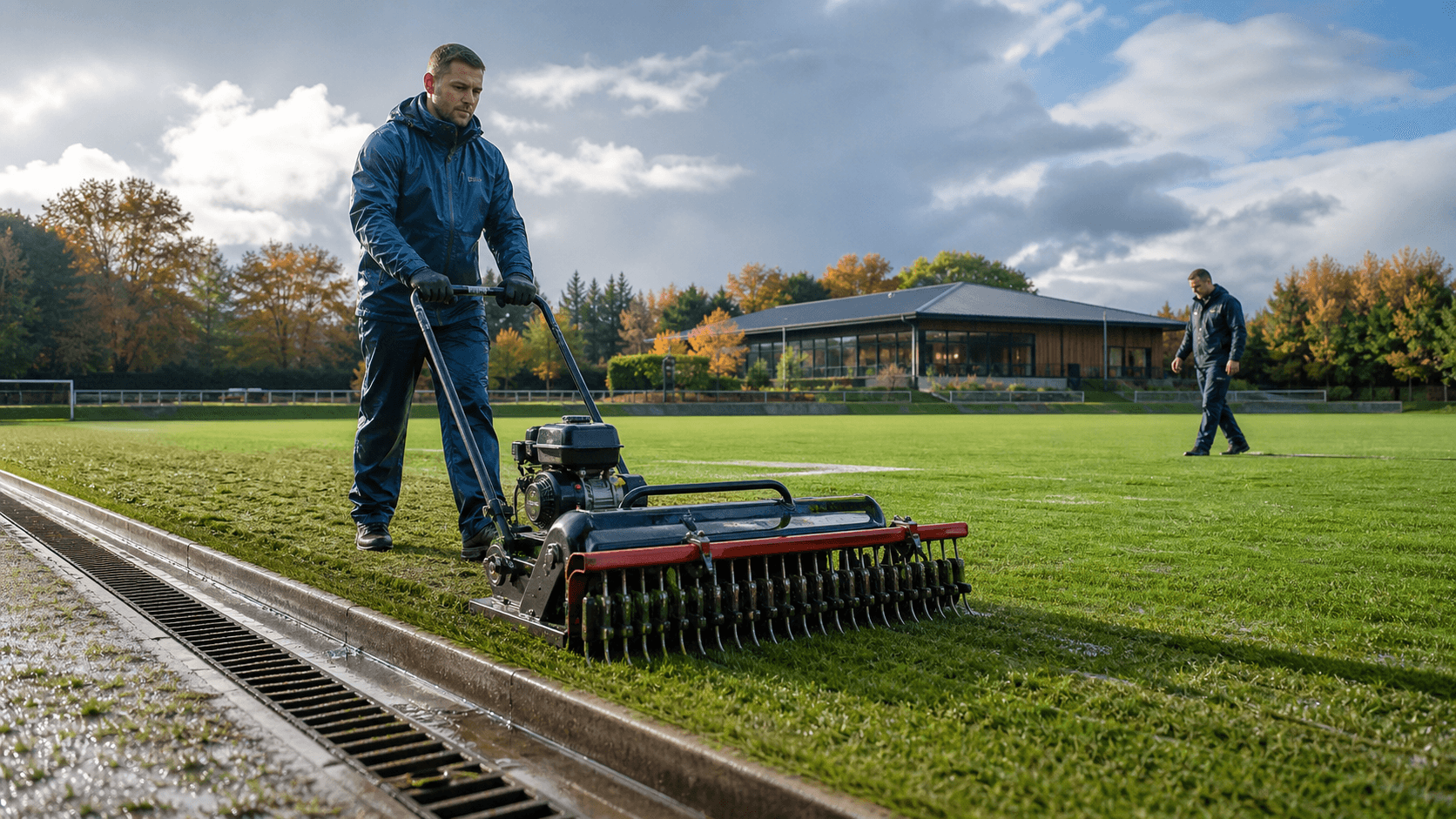
Autumn aeration can also play an important part in helping soil breathe. By improving movement of air and water through the ground, it can reduce compaction and support better drainage. This is particularly useful in areas where regular use, machinery or wet weather has caused the soil to become firm and closed over.
Leaf clearance matters here too. A thick layer of wet leaves can hold moisture against the grass, block light and leave the surface looking patchy by spring. We assess tree cover, soil condition and site use to shape an autumn programme that supports lawns, verges, communal green spaces and sports areas without treating every patch of turf the same.
Clear Leaves and Reduce Slip Risks
Wet leaves become far more than an untidy autumn feature when temperatures drop. On paths, car parks, cycle routes and entranceways, they can form a slick layer that becomes harder to spot once frost settles. They may also cover broken edges, uneven paving, drainage grates and early patches of ice.
Leaf clearance works best as a regular service rather than a single visit. Some sites need closer attention beneath tree canopies or around busy access points, while open areas may need a different schedule. We monitor the changing conditions so clearance can focus on the places where debris is most likely to create an issue.
While leaves are being removed, drainage should be checked at the same time. Blocked gullies and channels allow water to collect on hard surfaces. That standing water can freeze overnight, creating a hazard for employees, pupils, residents, customers and visitors before the working day begins.
When deciding where to focus first, we suggest prioritising:
- Main entrances and reception approaches
- Accessible routes and ramps
- Loading areas and delivery points
- Pedestrian crossings and communal walkways
- Emergency access routes and gates
This simple order helps ensure that the areas people depend on most remain clearer, easier to inspect and safer to use as conditions change.
Prepare Plants, Beds and Irrigation Systems
Autumn bedding, shrubs, hedges and young trees all benefit from attention before sustained frost arrives. A well-timed mulch layer can help regulate soil temperature, hold moisture in the ground and protect roots from sudden swings between wet, mild days and cold nights.
Plant health checks are equally useful at this time of year. Damaged growth can be removed where appropriate, while stakes and ties should be checked to make sure young trees remain supported through wind and wet weather. Suitable perennials may also need cutting back to keep beds tidy and reduce places where damp debris can gather.
Irrigation needs careful thought as temperatures fall. Water left in exposed pipes, taps and fittings may freeze and cause damage. Automated systems may need adjustment for wetter conditions, while some components may need draining down or protecting before hard frost becomes more likely.
A coordinated approach brings together planting areas, hard surfaces and water systems, rather than treating each one separately. In commercial grounds maintenance in Berkshire, we look closely at vulnerable locations such as shaded beds, exposed courtyards and wind-prone business parks, where frost can settle sooner and linger longer.
Put a Frost-Ready Grounds Plan in Place
The best winter preparation starts with what you can see on site during autumn. Areas that hold water, paths that stay in shade, lawns that receive heavy use and beds exposed to wind are all useful clues when setting priorities for the months ahead.
A pre-winter inspection gives you a chance to review turf condition, drainage performance, tree cover, planted areas, paths and access routes before frost and leaf fall become more severe. From there, maintenance schedules can be adjusted around the work that matters most, including leaf clearance, drainage checks, gritting support and storm damage response.
Keeping clear notes on risk areas and response times helps everyone understand what needs attention first when conditions turn cold. With a planned approach, your grounds can remain safer, cleaner and better protected throughout autumn and winter, rather than becoming another last-minute concern on a frosty morning.
Protect Your Grounds Before Frost Takes Hold
HumphriesTrio Grounds Maintenance provides dependable commercial grounds maintenance in Berkshire tailored to the demands of the colder months. Our team can help you keep outdoor spaces presentable, accessible and ready for changing conditions. To discuss your site's seasonal requirements, contact us today.