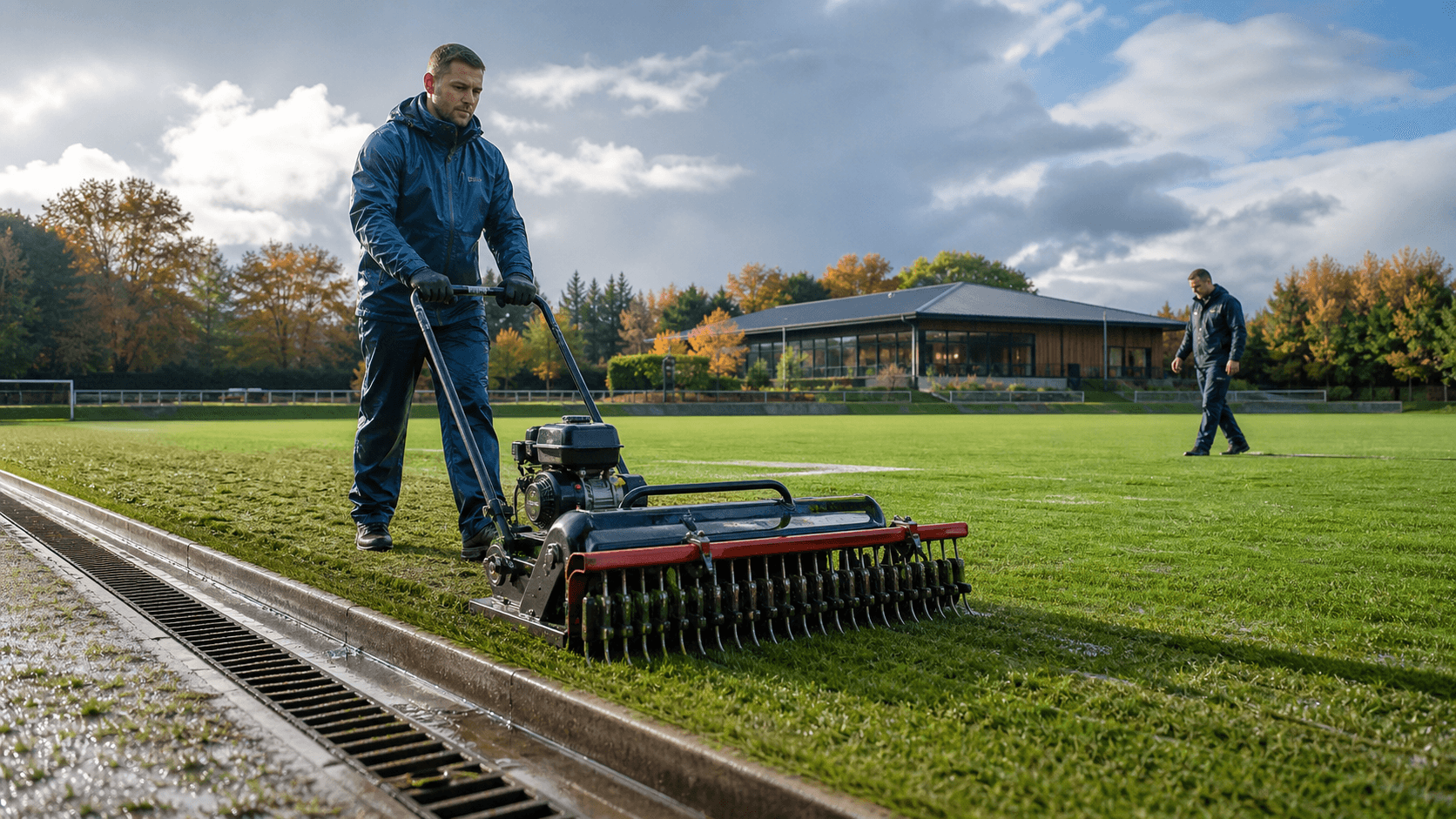
Keep October Playable Despite Relentless Rain
Wet October weather can turn a well-used sports pitch soft, muddy and unsafe in a short space of time. Frequent rain, cooler temperatures and a busy fixture list place real pressure on natural turf, especially at schools, clubs and managed sports sites.
Through planned sports turf management, we help protect playing quality, player safety and the long-term condition of pitches. Waiting for standing water or worn goalmouths to appear often means more disruption, more closures and more recovery work later. At HumphriesTrio Grounds Maintenance, we support sites across Oxfordshire and the South of England with dependable grounds care shaped around the conditions on site.
Know How Water Damages a Sports Pitch
When soil becomes saturated, it loses much of the strength needed to support players, grounds machinery and repeated use. Boots can press the surface down, machinery can leave ruts, and the top layer of soil can smear rather than drain. Once compaction sets in, rainwater has an even harder time moving away from the surface.
We recommend watching for early signs that a pitch is struggling, including:
- Pooling water that remains after rainfall
- Soft or unstable ground underfoot
- Bare patches and thinning grass
- Slow recovery after matches or training
- Uneven areas around goalmouths, touchlines or entrances
Continuing to play on overly wet ground can create slip risks and leave an uneven surface behind. Grass roots may also suffer where air cannot move through the soil, making it harder for turf to recover. A short-term decision to keep a fixture on can sometimes lead to a much longer closure later in the season.
Prepare Drainage Before Rain Builds Up
Good sports turf management starts with understanding where water goes. We assess where rainwater collects, how quickly the pitch drains and whether drains, ditches, gullies and outlets are doing their job. Water does not always sit where the underlying issue begins, so it is important to look at the wider site rather than one wet patch alone.
Before prolonged rain arrives, grounds teams should plan for tasks such as clearing leaf debris from drainage routes, checking outfalls and making sure nearby hard surfaces are not sending extra runoff onto the pitch. A blocked gully or damaged outlet can quickly create a problem during a heavy downpour.
Some pitches need more than routine clearing. Depending on the soil type, sport and level of use, we may recommend professional work such as sand slitting, verti-draining, surface sanding or drainage repairs. The right choice depends on the condition of the ground. Applying the wrong treatment, or carrying it out when soil is too wet, can make a difficult surface worse.
Adapt Mowing and Aeration to Conditions
Autumn mowing cannot always follow a fixed timetable. Cutting saturated grass can cause wheel marks, clumps of cut material and stress to the plant. If the pitch is too soft to carry equipment safely, waiting for a better weather window is often the sensible option.
Aeration can be particularly useful when it is properly timed. By relieving compaction and creating pathways through the soil, it can help air reach the roots and allow rainwater to move down through the profile. This supports stronger turf without forcing work onto ground that is already under strain.
Our planning considers pitch use, the forecast and the state of the soil before work begins. Heavy machinery used at the wrong time can leave lasting damage, while carefully chosen equipment and timings can support recovery. That judgement is why professional inspections matter throughout a wet month.
Protect High-Wear Areas Before They Fail
Certain parts of a pitch take more punishment than others. Goalmouths, centre circles, touchlines, entrance routes and training areas are often the first places to show wear when the weather turns. Repeated movement over the same wet ground can quickly expose soil and leave slippery, uneven patches.
A tailored programme can focus attention where it is most needed. Depending on site conditions, we may plan work around:
- Overseeding thin or bare turf
- Topdressing worn areas
- Repairing divots after use
- Rotating training activity where possible
- Allowing heavily used sections time to recover
Managing the fixture and training schedule also makes a difference. Where possible, we advise avoiding repeated use of the same areas after prolonged rain. Even small changes in how a site is used can reduce pressure on vulnerable turf and help keep more of the playing surface available.
Use Regular Inspections to Avoid Fixture Losses
October conditions can change quickly, so regular checks are far more useful than relying on a set maintenance routine. After heavy rain, we inspect for drainage blockages, standing water, surface damage and signs that turf is not recovering as expected. Catching these issues early gives you more options before a fixture is at risk.
Weather-led planning helps us time mowing, aeration, line marking and repairs around the ground conditions. Clear records and planned site visits also give facilities managers a better picture of pitch availability and safety, rather than relying on guesswork on match day.
Wet weather does not have to mean damaged pitches or avoidable cancellations. The practical takeaway is to assess drainage, protect high-wear areas and adjust maintenance before conditions become severe. Early action gives natural turf the best chance to cope with autumn rain and continued play.
Protect Playability Throughout The Season
HumphriesTrio Grounds Maintenance provides tailored sports turf management to support healthier, more resilient playing surfaces. Our team can assess your pitch requirements and deliver practical maintenance that suits its level of use. To discuss your grounds, contact us for professional advice.