Protect Your Site Before Water Damage Spreads
Drainage problems often stay hidden until they interrupt daily life on site. A flooded entrance, a slippery path, soft grass or water sitting in a car park can quickly affect safety, appearance and access. For estates, schools, managed developments and sports environments, these issues can also make outdoor areas harder to use when they are needed most.
We believe good grounds management is about more than mowing, pruning and keeping spaces tidy. It should include an awareness of where water flows, where it should drain away and which areas may be at risk after heavy rain. Autumn makes this especially important, as falling leaves, wetter weather and colder conditions can turn a small blockage into a larger issue before winter arrives.
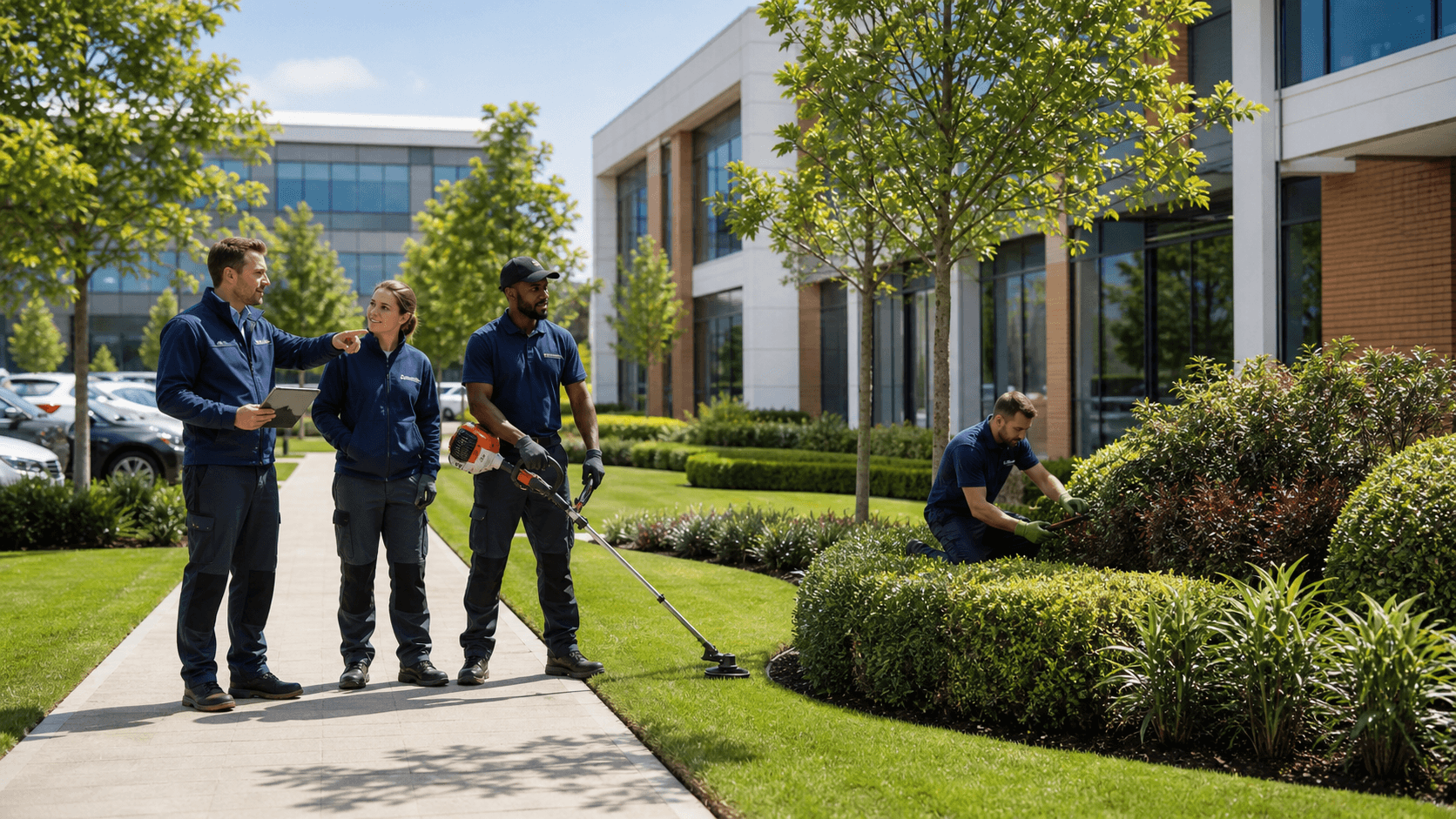
For property and facilities managers reviewing grounds maintenance contractors in Bedfordshire, the warning signs are often visible in the contractor's routine. A proactive team looks for early problems, records what it finds and raises concerns before water damage spreads.
Missed Inspections Leave Water with Nowhere to Go
One of the clearest signs of weak drainage management is the absence of scheduled inspections. If your contractor only looks at gullies and drainage channels after flooding has happened, preventative maintenance may be missing from the plan.
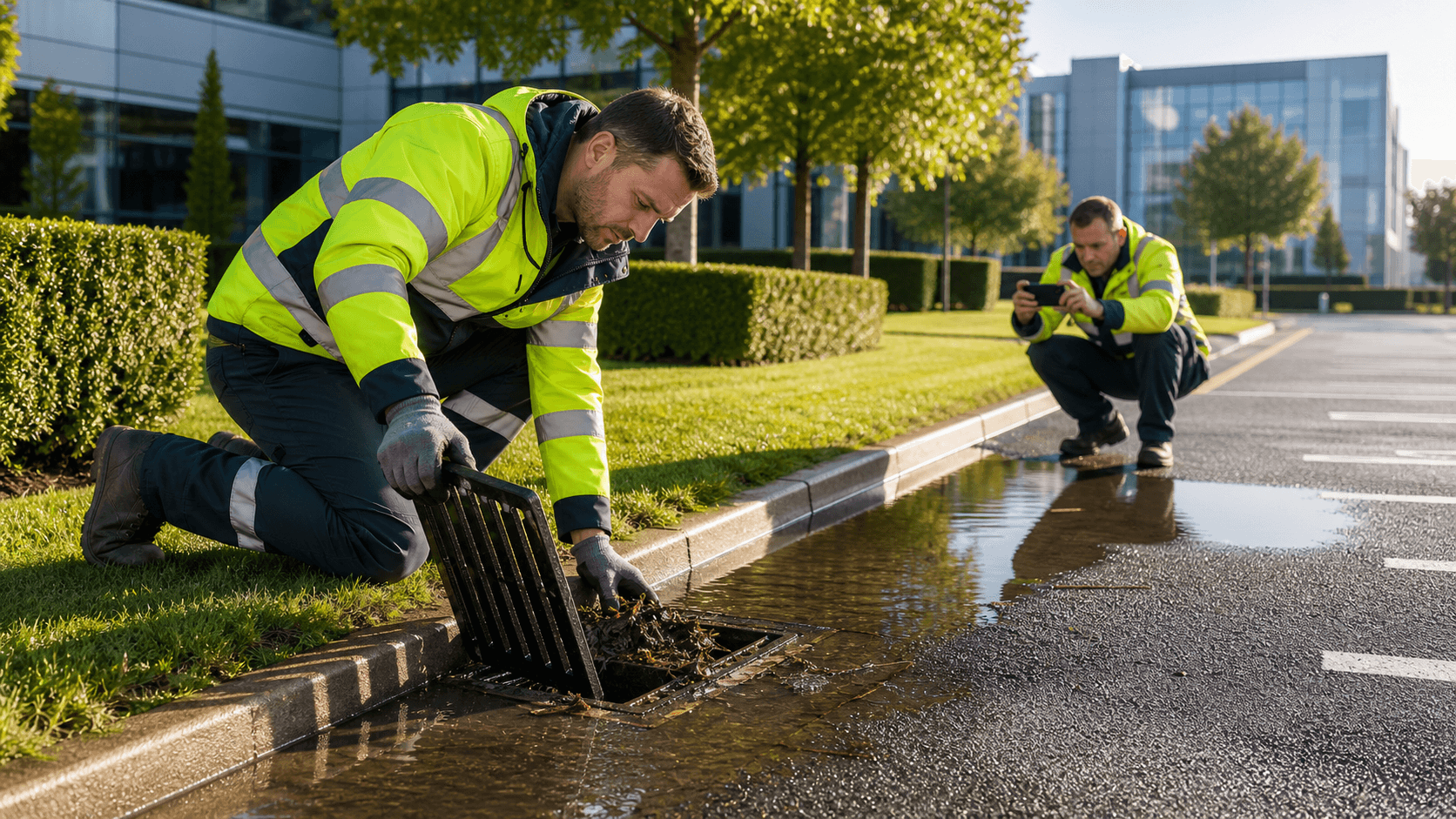
During regular visits, we recommend that grounds teams pay attention to drainage points around busy and exposed areas, including car parks, footpaths, entrances, planted beds and sports surfaces. Water does not always collect directly beside the source of a blockage, so inspections need to take account of the wider area.
Routine checks should look for:
- Blocked gullies, grates and drainage outlets
- Silt, leaves and litter restricting water flow
- Slow-draining channels or standing water nearby
- Damaged covers, loose grates or broken edges
- Soil and debris building up around drainage points
Inspection frequency may need to increase during leaf fall, after storms and through long periods of wet weather. A contractor that adjusts its visits to suit site conditions is far more likely to spot trouble early.
Clear records matter too. We encourage clients to ask for inspection notes, photographs and recommendations where drainage concerns are found. Documentation shows what has been checked, what needs attention and whether the same issue is returning over time.
Surface Failures Can Point to Hidden Problems
Water rarely causes damage in just one neat spot. A blocked drainage run, poor ground level or compacted soil can affect paths, lawns and hard surfaces some distance away. That is why surface changes should never be brushed aside as ordinary wear.
Persistent puddles, muddy gateways, algae on paths, cracked paving, eroded soil and damaged tarmac may all point to poor water movement. Aside from making a site look uncared for, these problems can create slip risks and allow minor defects to worsen.
Soft or waterlogged turf deserves the same attention. Grass, planted areas and sports turf need water to move through the ground rather than sit around roots for extended periods. Compaction, poor aeration and weak drainage can leave surfaces muddy, thin and prone to wear.
A capable grounds team should look beyond the visible symptom. Rather than simply clearing a puddle or treating algae, we would expect the likely cause to be considered. It may involve a blocked outlet, a damaged edge, a poor gradient, compacted ground or planting that is interfering with drainage features.
Autumn Debris Can Overwhelm Working Drainage
Autumn is one of the busiest times for drainage risk. A system that appears to work well during drier months can struggle when leaves, twigs, moss and washed-in soil build up after repeated rainfall.
Gutters, gullies, channel drains and catch pits can all become obstructed if debris is not cleared promptly. Once water has nowhere to go, it may run across pedestrian routes, pool near building entrances or spread into parking and landscaped areas.
Seasonal grounds maintenance should respond to the weather, rather than follow the same routine regardless of conditions. During autumn, we recommend closer attention to leaf collection, path sweeping and checks after heavy rain. Clearing around drainage features also helps reveal faults that might otherwise stay covered.
A well-managed site should not leave drain covers buried beneath leaf litter or allow debris to build up against outlets. When drainage points are visible, it is easier to spot broken grates, silting and poor water flow before they lead to disruption.
Reporting Gaps Turn Small Defects Into Larger Problems
Poor communication can be just as concerning as missed maintenance. A site team may notice a blocked gully, damaged channel or soft area of ground during a visit, but if that information is not reported clearly, the client cannot make an informed decision.
Useful drainage reports should explain the issue in plain language and help you understand what needs to happen next. They should not simply state that there is "standing water" without identifying where it is, why it may be happening or how urgent it is.
A practical report may include:
- The exact location of the concern
- Photographs showing the condition found
- The likely cause and level of risk
- Recommended maintenance or repair work
- Advice on whether a specialist is needed
For example, a blocked gully beside a busy entrance may need fast attention before more rain arrives. A soft grassed area away from main access routes may need investigation and planned improvement. The right priority depends on safety, site use and the chance of further damage.
When reviewing grounds maintenance contractors in Bedfordshire, ask how they separate routine tasks from work requiring drainage engineers, resurfacing teams, arboricultural support or wider landscape improvements. Transparent recommendations make it easier to protect your site without guessing what has been overlooked.
Put Drainage Assurance at the Heart of Your Plan
Drainage should be part of every planned grounds management programme, not an afterthought once water is already causing damage. We recommend asking how drainage risks are inspected, how findings are recorded and how the service changes after severe weather or during autumn and winter.
Early action can help protect paths, car parks, lawns, sports surfaces, buildings and the people using them. Regular monitoring, prompt debris clearance and clear reporting give you a better chance of dealing with small defects before they interrupt access or lead to more extensive repairs.
Protect Your Grounds With Expert Support
HumphriesTrio Grounds Maintenance provides practical inspections and planned maintenance tailored to your site's needs. Our grounds maintenance contractors in Bedfordshire can help identify and manage drainage concerns as part of a reliable upkeep programme. To discuss your grounds and arrange a tailored assessment, contact us today.