Protect Playing Surfaces Before Winter Weather Arrives
Mid-October is a sensible point to review sports turf before colder, wetter weather settles in. For schools, clubs, leisure facilities and commercial estates, a pre-winter check gives us time to spot small issues before they lead to poor playing conditions, closures or difficult repairs in spring.
Winter can be hard on natural turf. Persistent rain can cause waterlogging, repeated use can compact the soil, and frost can weaken grass plants and leave surfaces uneven after a thaw. Grass growth also slows as daylight reduces, while damp conditions can increase disease pressure. By acting early, we can help you keep pitches safer, stronger and more playable through the busiest parts of the season.
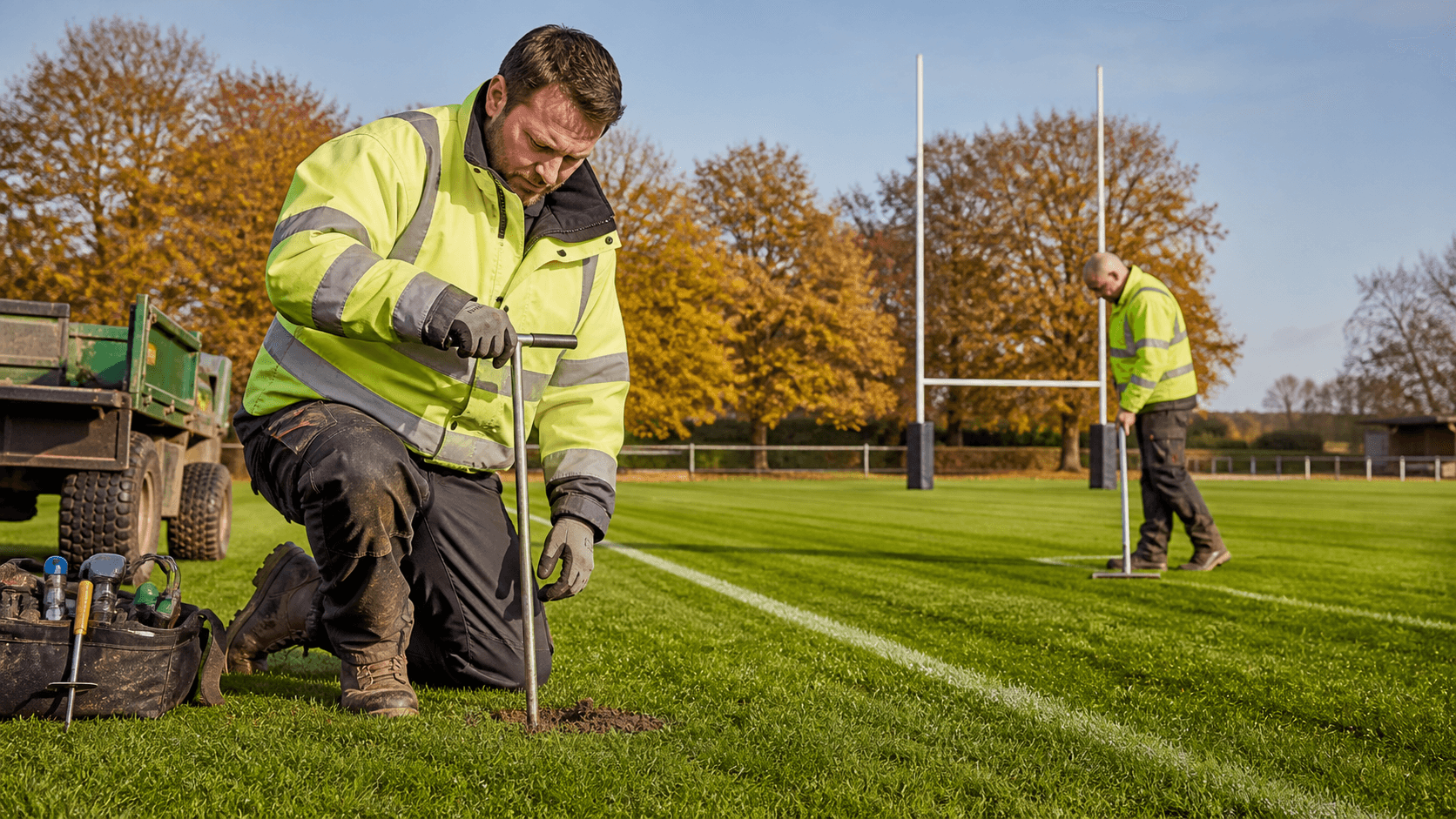
A professional inspection gives us a clear starting point. We look at how the pitch is used, the soil beneath it, drainage performance, grass cover and areas already showing signs of wear. From there, we can plan work around your fixtures and the recovery time your turf needs.
Assessing Drainage and Surface Stability
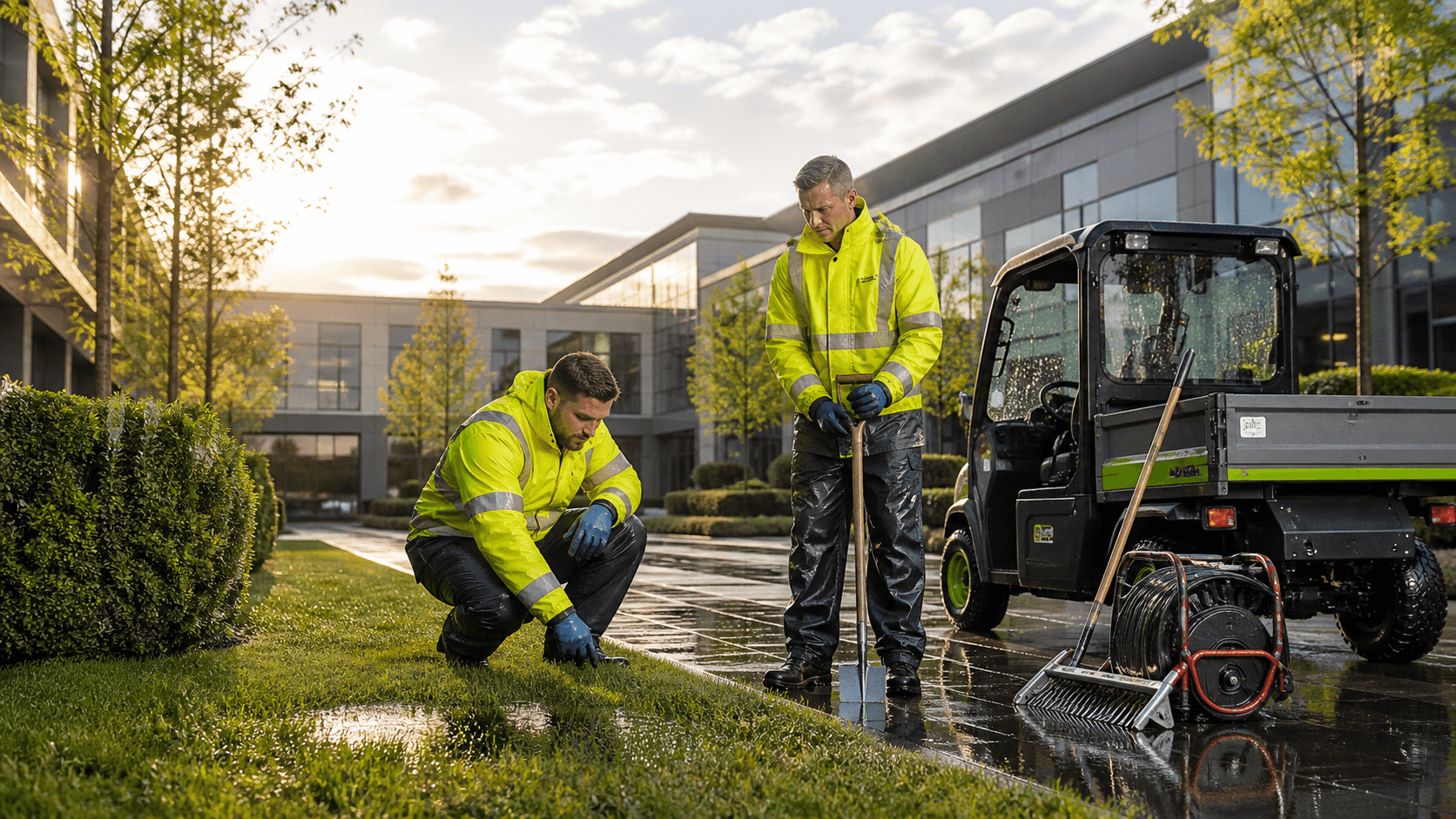
Before winter rainfall becomes regular, we inspect how quickly water moves away from the playing surface. Standing water, soft patches and slow-draining areas often point to a problem beneath the grass, rather than a simple surface issue. Blocked drains, compacted soil and uneven ground can all stop water from travelling where it should.
During an assessment, we pay close attention to:
- Puddling or persistently wet areas
- Drainage channels and outfalls that may be blocked
- Soil compaction and poor air movement around roots
- Uneven ground, dips and unstable sections of the pitch
- Damage around entrances, walkways and maintenance routes
Compaction is a common problem on well-used grounds. When the soil is pressed tightly together, roots struggle to develop, water cannot drain freely and the surface can become hard in dry spells but muddy in wet ones. Depending on conditions, we may recommend aeration, slitting or deeper decompaction. The right method depends on the soil profile, weather and planned use of the pitch, so work should always be timed carefully to avoid unnecessary disruption.
High-wear zones deserve particular attention. Goalmouths, touchlines, centre circles and access routes often receive more footfall than the rest of the surface. Targeted repairs, overseeding or temporary protection in these areas can prevent a small worn patch becoming a larger muddy problem once wet weather and regular play combine.
Strengthening Grass Cover and Root Health
Strong grass cover is one of the best forms of protection a pitch can have. Before late autumn slows growth, we check turf density, bare areas and the strength of the root system. Thin grass may not recover quickly once temperatures fall, especially where training and fixtures continue through wet conditions.
Sports turf contractors in Buckinghamshire will usually consider a mix of treatments based on the pitch type, grass species, soil condition and expected winter use. There is no single approach that suits every field. A school pitch with daily activity may need a different plan from a club surface used mainly at weekends.
Possible seasonal work may include:
- Overseeding worn or thin areas with suitable grass seed
- Divoting and levelling damaged ground after use
- Topdressing to support surface levels and soil structure
- Carefully planned nutrient applications
- Removing debris that shades grass and holds moisture
Autumn is also a time to watch closely for fungal disease. Damp turf, reduced daylight and a build-up of organic debris can create conditions where grass health declines quickly. We look for early signs of change and review mowing practice, airflow and surface cleanliness. Balanced nutrition, suitable cutting heights and regular leaf clearance all support healthier turf without putting extra strain on grass that is already growing slowly.
Preparing Winter Maintenance Plans for Busy Facilities
A winter programme needs to work around the way you use your site. Before setting a schedule, we review fixtures, training sessions, school timetables, access arrangements and any periods when pitches can be rested. This helps us protect the surface while still giving you a practical plan for availability.
Routine care remains important, even when growth is limited. Grass may need mowing less often, but cutting at an appropriate height helps maintain a tidy, stable playing surface. Leaf clearance is equally important, as wet leaves can smother grass, hold moisture and block drainage routes. We also monitor line markings, litter, edges and nearby hard surfaces, where mud and debris can be carried back onto the turf.
Clear weather trigger points help everyone make better decisions. We can agree when a pitch should be restricted, when training should move elsewhere and when an inspection is needed before play goes ahead. Acting before serious damage occurs is usually far more effective than trying to repair deep ruts or widespread mud later in the season.
Managing Pitches Through Frost, Rain and Reduced Daylight
Frozen pitches should not be used heavily or maintained with machinery. Footfall on frozen grass can damage the crowns of the plants, while equipment can compact the ground and disturb the surface. Once the soil thaws, the affected areas may become uneven, soft or slow to recover.
Long periods of rain bring a different set of concerns. We assess whether water is draining safely, whether the surface is still firm enough for play and whether continued use may create rutting, mud contamination or safety concerns. A pitch can appear playable at first glance while still being unstable beneath the surface.
Regular winter inspections allow us to find developing problems early, including:
- Worn goalmouths and sidelines
- Soft ground or drainage failures
- Bare areas spreading after repeated use
- Surface damage caused by frost and thawing
- Early signs of turf disease
The best winter plan is one that responds to changing conditions. Timely drainage work, suitable turf care and sensible decisions about use can help protect playing quality and reduce disruption when spring growth returns.
Protect Your Pitch Through Winter
HumphriesTrio Grounds Maintenance provides practical, site-specific support for clubs and facilities preparing for colder weather. Our sports turf contractors in Buckinghamshire can assess your pitch requirements and recommend the right maintenance programme. To discuss your grounds, contact us for tailored advice.